


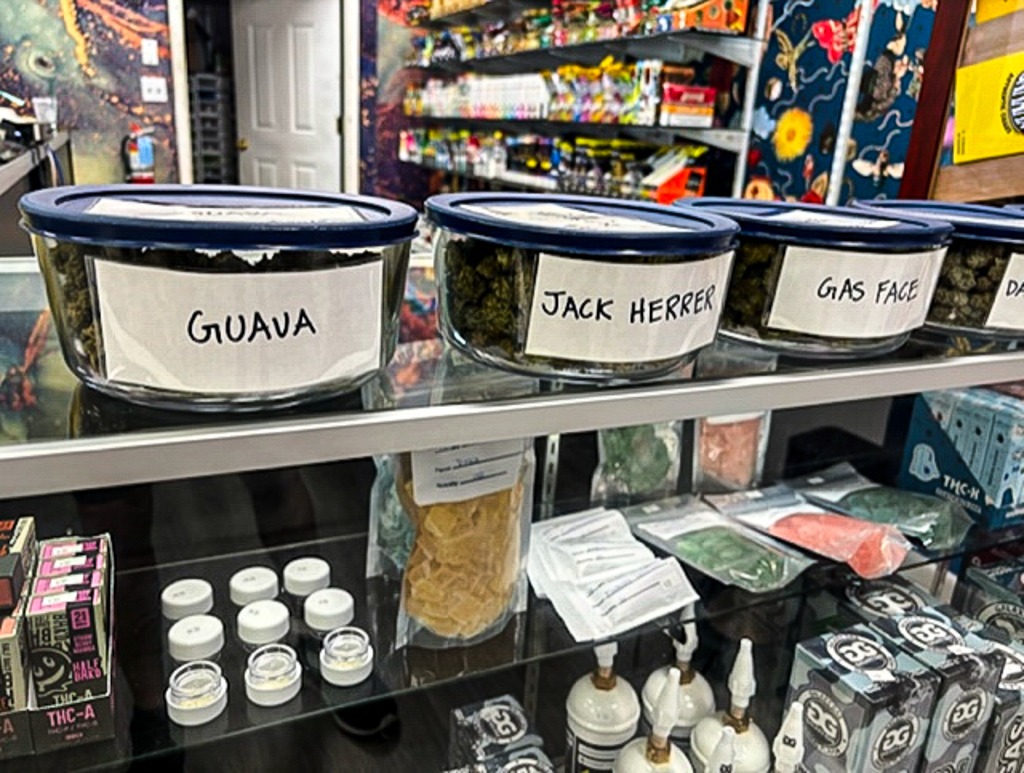
THC-A cannabis flower jars are now available at various smoke shops, including Slackers Supply in Oxford, Mississippi. With the state’s medical marijuana program in place for two years, a new kind of cannabis is emerging, appealing to those aged 21 and up as a legal alternative.
THC-A, or tetrahydrocannabinolic acid, should not be confused with THC, the primary compound responsible for marijuana’s psychoactive effects. Unlike THC, THC-A can be purchased without a state-issued medical marijuana card, making it an attractive option for consumers.
Regulatory Framework
The federal Agricultural Improvement Act of 2018, known as the Farm Bill, legalized cannabis products containing 0.3% or less THC by weight, categorizing them as hemp. This legislation paved the way for derivative products, including THC-A cannabis flower, which also meets this criterion.
James Funk, owner of Slackers Supply, leads the commercialization of THC-A in Oxford. Having opened his shop 14 years ago, he has now diversified his inventory to include THC-A cannabis flower alongside traditional smoke shop products.
Understanding THC-A
Funk explained that THC-A is usually harvested earlier than conventional cannabis, resulting in a quicker two-month growth cycle instead of six months. This early harvesting is crucial for compliance with federal THC regulations.
“THC acid will not produce euphoria or get you high,” said Robert Welch, director of the National Center for Cannabis Research and Education. “You have to decarboxylate it by applying heat to convert it to THC.” This chemical process is why THC-A can be legally marketed while maintaining its non-psychoactive properties.
Funk stated that sourcing is vital for his business, emphasizing quality and freshness by procuring all THC-A from Oregon. He noted the necessity for smoke shops to ensure competitive pricing and superior products as the market for THC-A expands.
The Market Landscape
Despite potential benefits, skepticism remains regarding products derived from the Farm Bill. Welch cautioned that many companies produce THC-A and Delta-8 products with inadequate transparency about their sourcing, which could pose risks to consumers.
At Sunmed CBD, another local establishment, employee Cyrus Reynolds mentioned that their THC-A comes from “a trusted resource,” although they did not elaborate on its harvesting process or whether it was chemically derived.
Amidst these developments, opinions vary among retail staff. A budtender at Magnolia Cannabis Dispensary articulated concerns about THC-A’s genuine efficacy, suggesting it serves mainly as a substitute for those unable to obtain a medical card.
Regulatory Concerns and Consumer Safety
Issues of regulation and sourcing transparency are critical, as Welch pointed out that companies may not legally be obliged to disclose product origins. “That’s the problem with a lack of regulation,” he stated, indicating that due diligence is vital for consumer safety.
While purchasing THC-A from reputable stores may be a safer option compared to unregulated sources, Welch cautioned that it carries inherent risks. “If you’ve got to get high but don’t have a med card, then buying THC-A from reputable stores may be safer than buying it from unverified sellers,” he said, underscoring the importance of informed consumer choices.
