

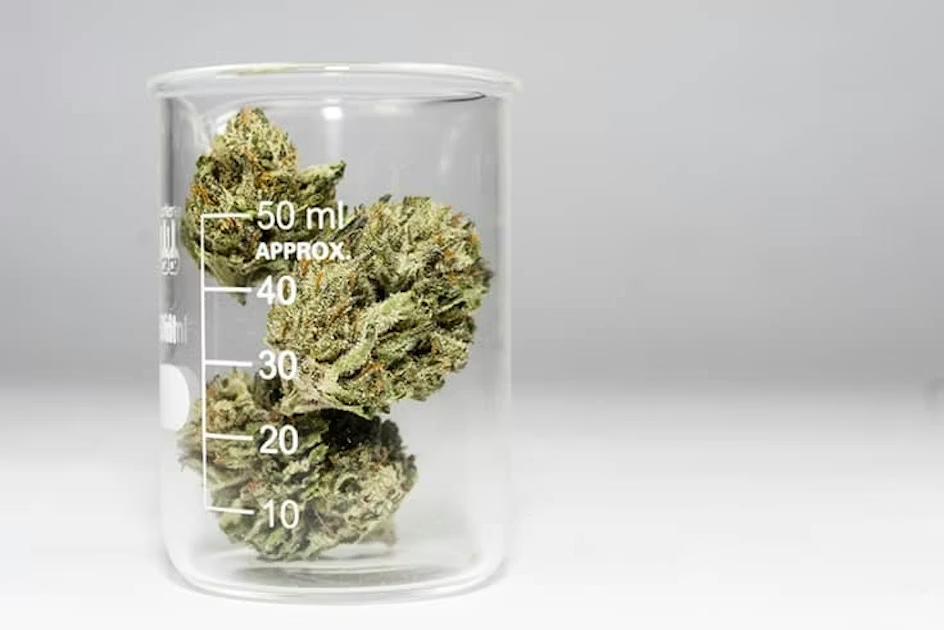
The University of Mississippi has been a federally approved cultivator of cannabis, supplying cannabis and cannabinoids to researchers with projects approved by the National Institute on Drug Abuse (NIDA). Building on this experience and inspired by recent efforts in Mississippi to legalize medical cannabis, the School of Pharmacy is launching the National Center for Cannabis Research and Education (NCCRE), aimed at conducting scientific research, data analysis, and education regarding the health effects of cannabis.
Research Initiatives and State Benefits
According to Larry Walker, Ph.D., the interim director of the center, previous federally funded projects imposed significant limitations. “We were fairly restricted because it was a federal program,” Walker stated. “Now, we feel it’s time to begin something separate from our NIDA-funded project that could contribute to research and education benefiting the state.”
As state-level cannabis programs gain momentum nationwide, Walker and his team believe that the research conducted at the university will not only support Mississippi but may also provide valuable insights for other states developing their own regulatory frameworks. “We want to give them the scientific and health information needed for policy decisions,” he explained.
Future Research Focus
The NCCRE is currently working to secure funding and hire new staff to launch its initial studies. The research will focus on the delivery of THC and other cannabinoids through various formulations and their effectiveness in targeting specific medical conditions. “I’m hopeful we can conduct selected clinical research studies with volunteers or patients,” Walker said. “The objective is to determine the necessary drug levels and duration for treating particular disorders.”
The center will specifically investigate the outcomes of cannabis-based medicines in treating certain diseases, examining both the benefits and potential adverse effects experienced by patients. “We aim to provide sound science, education, and training for stakeholders involved in the program, including physicians, pharmacists, and dispensary personnel,” Walker added. “Our goal is to enhance understanding of the chemistry and pharmacology of cannabinoids.”
Recruitment and Partnerships
While the School of Pharmacy has board members committed to cannabis research, the NCCRE intends to recruit additional personnel to expand its capabilities. Walker emphasized the need for leadership and sufficient funding to support qualified staff who can carry out this vital work.
The center is in its early stages, and the direction of future research will depend on various factors, including available funding and potential partnerships with cannabis companies. Walker noted, “There are many companies interested in collaborating on research, and we’re in discussions with some of them. Our focus is on analyzing science-based products for state programs.”
For further details on cannabis-related regulatory developments, you can refer to resources from the National Institute on Drug Abuse.
