


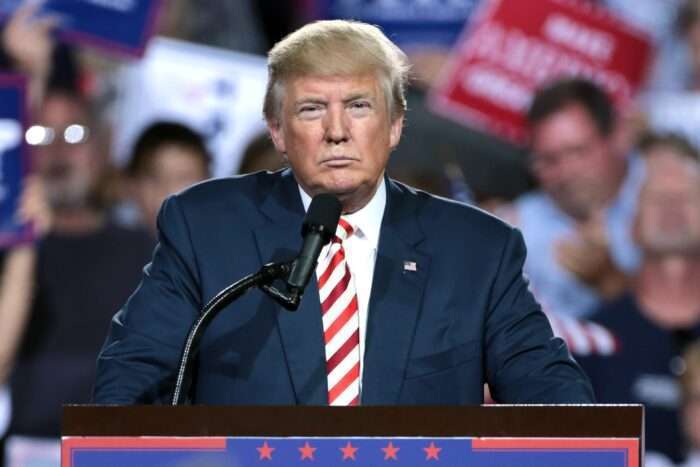
President Donald Trump (R) has announced plans to address cannabis legalization through an imminent Executive Order. However, his proposal may involve merely endorsing a shift of marijuana from Schedule I to Schedule III on the Schedule of Controlled Substances, a process known as rescheduling.
Descheduling Versus Rescheduling Cannabis
A broad coalition of activists, social justice organizations, independent dispensaries, Multi-State Operators (MSOs), and Heady NJ advocates for descheduling as a means to achieve true federal cannabis legalization. They argue that descheduling would create an equitable framework that supports small business growth more effectively than rescheduling. According to NORML, a prominent cannabis legalization group, rescheduling fails to resolve the ongoing conflict between federal and state laws and does not offer additional legal protections for millions of cannabis consumers or state-licensed dispensaries. Furthermore, it does not address the injustices faced by individuals previously criminalized under federal cannabis laws.
Tony Minnitti, CEO and pharmacist at Camden Apothecary dispensary, has expressed concerns that rescheduling to Schedule III may benefit Big Pharma and the FDA over the state-licensed cannabis market. In fact, a significant survey of federal regulatory comments in the past year indicated that descheduling cannabis was the favored political position among stakeholders.
Former President Joe Biden (D) supported a move to Schedule III marijuana rescheduling in spring 2024, initiating the process in October 2022. This led to a DEA-led review process that stalled upon Trump’s assumption of office. Notably, Trump has recently intensified federal enforcement against minor cannabis offenses on federal lands, including national parks, stirring further concern among industry advocates.
Industry and Advocacy Perspectives on Cannabis Legalization
The cannabis industry, eagerly awaiting reform, has responded positively to Trump’s announcement. Current IRS regulations under Section 280E prevent plant-touching businesses from deducting expenses, which significantly impacts profit margins—particularly for small operators. Jeffrey Miller, CEO of HoneyProjects, stated that while any loosening of federal cannabis policy is noteworthy, a shift to Schedule III could introduce uncertainty for small businesses within state-regulated markets. He emphasized the need for careful consideration of the potential unintended consequences of such a move.
Celebrity cultivator Jim Belushi appreciated the direction towards legalization, indicating that his enterprise operates in 18 states and is making strides in New Jersey. As an advocate for patient rights and adult-use legalization, he underscores the necessity of recognizing the complexities of federal cannabis laws.
Jillian Snider, a retired NYPD officer now with the R Street Institute, pointed out that while rescheduling is a step forward, it does not eliminate federal prohibition. She has stressed the importance of full descheduling for clarity and public safety.
Tamara Anderson, Founder of Culinary & Cannabis, expressed frustration over the disjointed messaging from the administration regarding cannabis reform, urging that any changes should be made responsibly and directly consider the needs of operators and patients.
Opposition to Cannabis Reform
As discussions of federal cannabis reform progress, opponents—including lobbyists like Kevin Sabet—are mobilizing to maintain the current prohibition framework. Political dynamics within the Republican Party complicate the landscape, with figures like House Speaker Mike Johnson of Louisiana opposing the Schedule III proposal. Trump has historically navigated varying factions within his party, indicating his adaptability in appealing to pro-business sentiments while addressing the complex issue of cannabis regulation.
In summary, while there is cautious optimism surrounding President Trump’s potential cannabis legalization efforts, particularly regarding the prospect of moving towards Schedule III, the broader cannabis community emphasizes the necessity for full descheduling to ensure true equity and legal clarity across the industry.
