

After a prolonged delay by Mississippi Governor Tate Reeves regarding a special session last fall, the state Senate took decisive action by passing medical cannabis legislation this week. The Senate swiftly approved the Mississippi Medical Cannabis Act, Senate Bill 2095, with a strong 46-5 vote after introducing the bill just two days prior. This passage sends a clear message to both the House and the governor.
The legislation, crafted by Senator Kevin Blackwell since early 2021, allows registered patients to access up to 3.5 grams of medical cannabis flower, 1 gram of concentrate, or 100 milligrams of THC in an infused product daily—equivalent to approximately 3.7 ounces of flower monthly. This possession limit has been a point of contention between the Legislature and Reeves, who previously requested it be halved before calling a special session, a request that was one of many made by the governor.
Legislative Tensions and Goals
Senators Blackwell and Lee Yancey, both Republicans, remained firm on the possession limits established in their compromise bill. The legislative push from Blackwell and Yancey aims to fulfill the intent of the voter-approved Initiative 65 from November 2020, which was annulled by the state’s Supreme Court due to technicalities in the signature-gathering process.
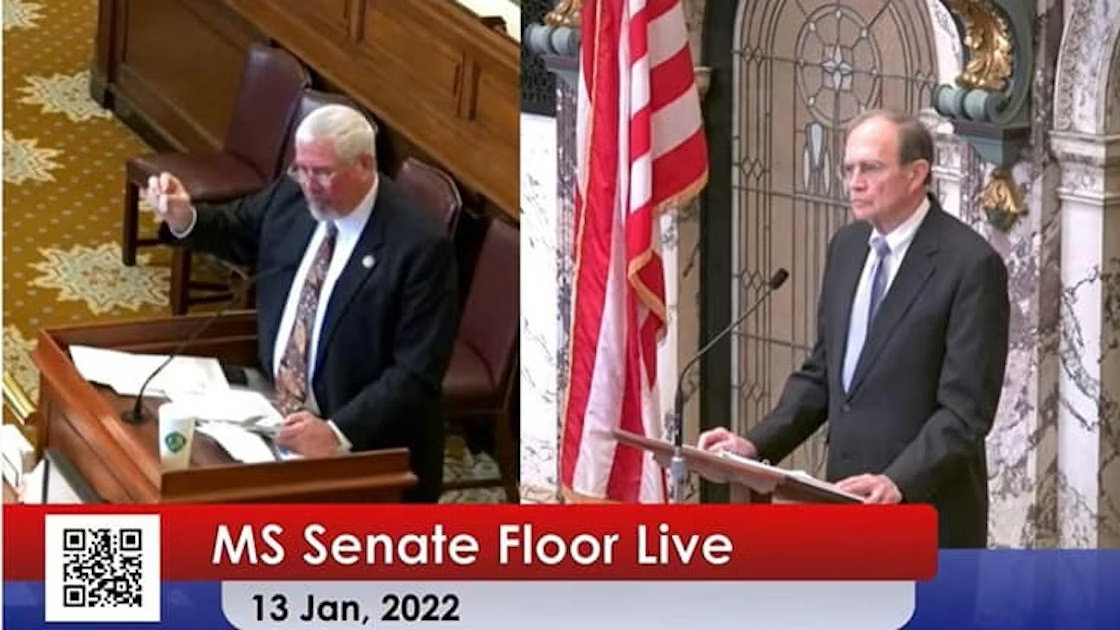
In a late December post, Reeves expressed concerns about the potential for excessive use, claiming that the daily limit would permit individuals to “smoke 11 joints a day.” In response, Blackwell brought a joint of hemp and various low-THC product samples to the Senate chamber, emphasizing the need for accurate understanding of the proposed limits. He clarified that the 3.5 grams would equate to about three and a half joints daily, countering the governor’s exaggerated assertion.
During a recent meeting with Reeves, Blackwell noted that while the governor appreciated the direction of S.B. 2095, he did not endorse the bill. Nevertheless, the Senate proceeded with support from 90% of its members.
Key Provisions of S.B. 2095
In addition to setting possession limits, S.B. 2095 introduces a 5% excise tax on medical cannabis products, alongside the state’s existing 7% sales tax. The bill also mandates a seed-to-sale tracking system and allows local governments to opt out of cultivating, processing, selling, or distributing medical cannabis within their jurisdictions. An unlimited licensing structure will be available for those interested in participating in the program.
Several amendments were proposed during the legislative process, yet only a minor language adjustment offered by Blackwell was passed. An attempt by Democratic Senator Barbara Blackmon to permit outdoor cultivation and harvesting failed due to concerns over additional supervision costs. Furthermore, an amendment seeking to expedite the expungement process for individuals with prior cannabis-related convictions was also rejected, as Blackwell argued that its integration would create ambiguity in defining qualifying medical cannabis patients.
Future Implications for Cannabis in Mississippi
Amidst ongoing discussions, Republican Senator Angela Burks Hill proposed a strike-all amendment for an alternative bill with a more limited scope. Blackwell dismissed this proposal, asserting that passing such an amendment would hinder the establishment of a viable medical cannabis program, which he has diligently worked towards since May.
Throughout the proceedings, Blackwell emphasized that S.B. 2095 is a medical bill, countering any comparisons to adult-use cannabis legislation. His earlier remarks in the session included lyrical references to Bob Dylan, aimed at illustrating the exaggerated fears surrounding medical cannabis legalization.
As the Mississippi Senate transitions the responsibility of this landmark medical cannabis reform to the House, the outcome will significantly impact the state’s emerging cannabis industry and its regulations.
