


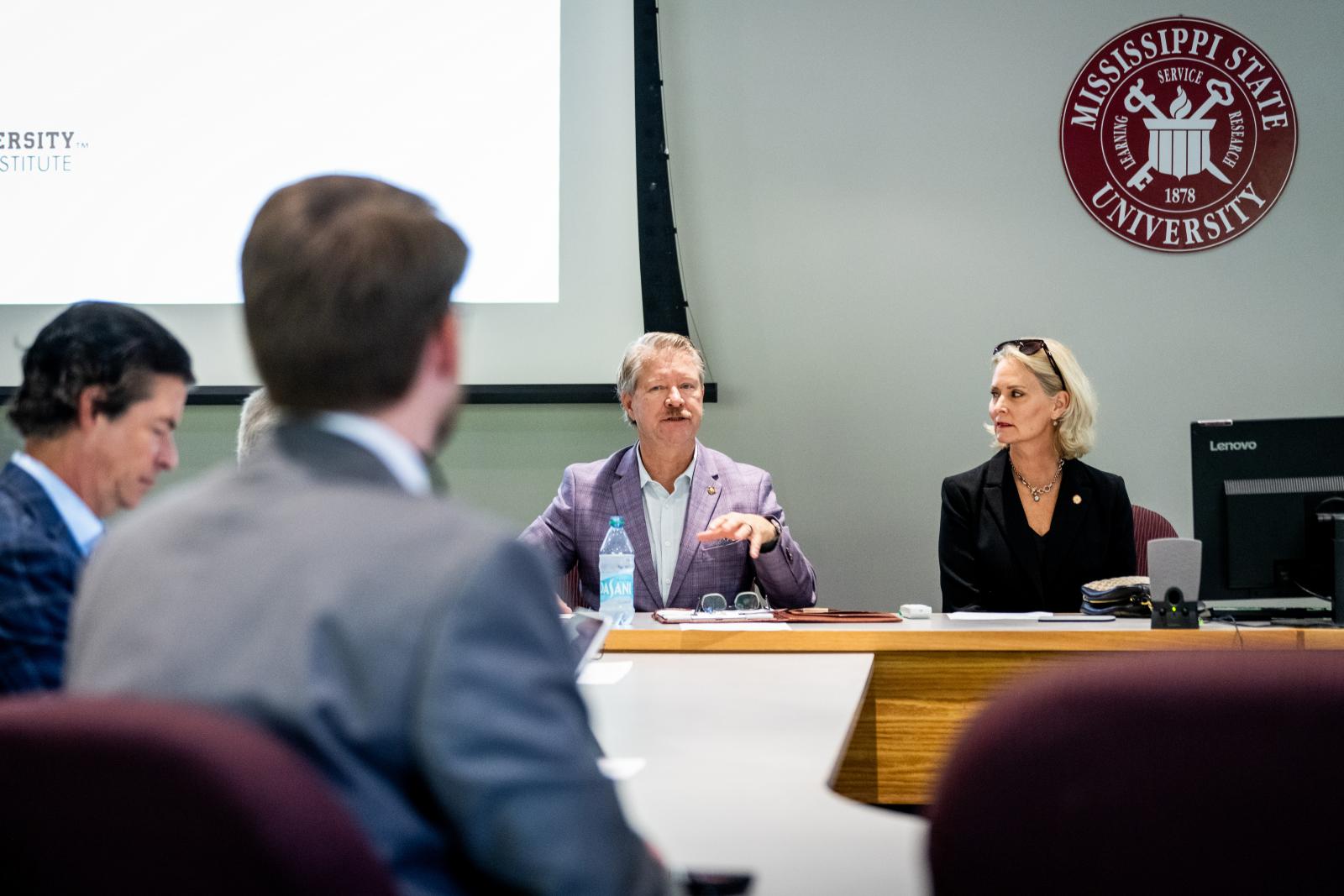
Chairs of the AI Legislative Task Force, State Senator Bart Williams of Starkville and State Representative Jill Ford of Madison, participated in a meeting at Mississippi State University (MSU) on Thursday, September 25. The meeting included a tour of MSU’s cutting-edge research centers, showcasing the university’s contributions to artificial intelligence (AI) and emerging technologies. Areas of focus for the task force include protecting intellectual property, ensuring data privacy, and enhancing children’s safety.
Legislative Recommendations for Mississippi
The Artificial Intelligence Legislative Task Force aims to develop legislative recommendations by mid-December to help shape Mississippi’s policies on the rapidly evolving technology.
This 11-member task force has been engaging with public and private stakeholders statewide. Their recent visit to MSU was intended to understand how the university supports the state’s ambitions to become a leader in technology and innovation.
“We are a tech destination,” Senator Williams stated. Future engagements include a visit to Mississippi Gulf Coast Community College in October and meetings at the Capitol in Jackson in November and December. “We welcome public input. We know good legislation comes when we seek public input,” he added.
Balancing Innovation and Safety
Williams emphasized the task force’s commitment to supporting innovation while ensuring public safety. “We don’t want to be restrictive of technology, but we want to protect the public’s safety,” he noted, indicating that the task force might implement “guardrails” on AI development.
During a recent interview, Williams referenced the Walker Montgomery Protecting Children Online Act, which aims to shield minors from harmful online material. While this law faced scrutiny over First Amendment concerns, it was upheld by the Fifth Circuit Court of Appeals earlier this year and is now under review by the U.S. Supreme Court.
This legislation was introduced by Representative Jill Ford in response to the tragic death of Walker Montgomery, a 16-year-old from Starkville, who fell victim to an online predator.
Future Directions for AI Regulation
Williams compared the complexities of AI legislation to the evolution of automotive safety standards. “When the Model T roamed the rutted roads of America, there were no safety standards. Now, there are hundreds of federal vehicle safety standards,” he explained, likening the challenge of AI regulation to “lassoing a cloud.”
Mississippi is making significant investments in AI, with plans for three new data centers. Lawmakers aim to establish governance structures, promote AI development, and fund initiatives that involve private companies and workforce development.
During their MSU visit, task force members toured key technology research facilities and highlighted the state’s growing economic appeal for tech initiatives. “We’re on the radar throughout the nation thanks to the leadership of many in this room, and we want to continue to do that,” Williams stated.
The tour included visits to MSU’s new data center, which features advanced supercomputing capabilities. Additionally, the institution showcased its innovations in off-road autonomous vehicles and efforts through the Agriculture Autonomy Institute, which provides data-driven insights to assist farmers in decision-making.
Julie Jordan, MSU Vice President for Research and Economic Development, reiterated the importance of infrastructure for national AI development. “The state of Mississippi has invested in building that type of infrastructure right here at Mississippi State University, so we’re poised to move quickly on any needs the state has,” Jordan concluded.
