


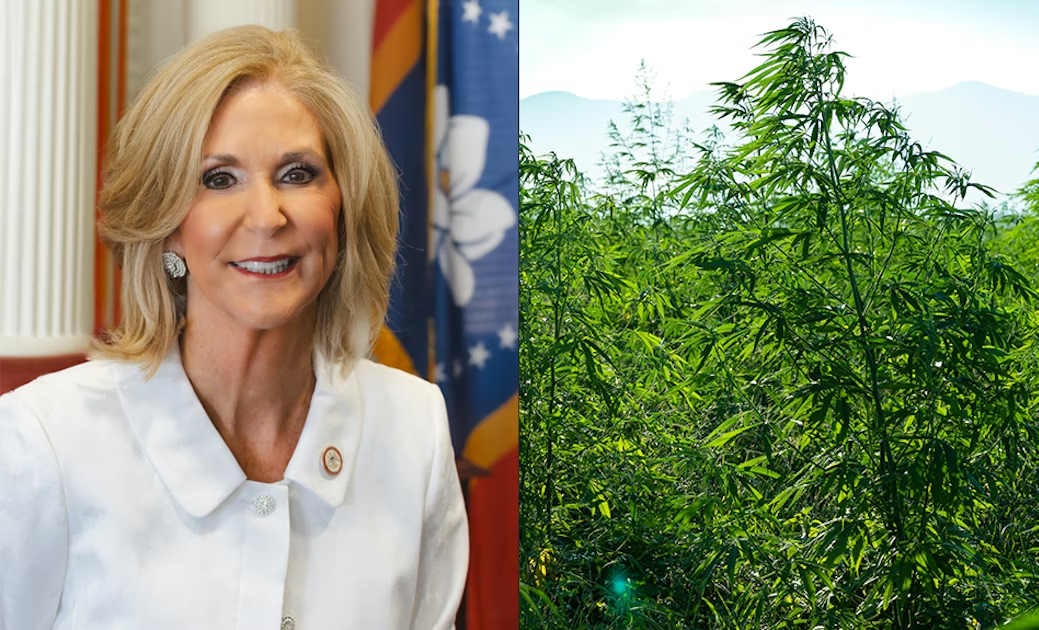
Despite a failed attempt by Mississippi lawmakers to ban intoxicating hemp products this legislative session, the state’s top legal adviser has stated those products are already prohibited in the state. State Attorney General Lynn Fitch provided this clarification in an opinion issued on June 11, asserting that Mississippi’s Uniform Controlled Substances Law forbids the sale of consumable products containing hemp derivatives that are not approved by the U.S. Food and Drug Administration (FDA).
Fitch emphasized that items such as marijuana and THC are classified under Mississippi’s Schedule I controlled substances. The only exception applies to products sold through licensed medical cannabis dispensaries regulated under the Medical Cannabis Act, which was signed into law by Republican Governor Tate Reeves on February 3, 2022. This act followed the state Supreme Court’s overturning of a medical cannabis initiative approved by voters. Dispensary sales subsequently began in January 2023.
Legislative Context and Clarity on Regulations
Fitch’s opinion came in response to a request from Rep. Lee Yancey, R-Rankin, who sought clarity after his legislation to ban intoxicating hemp products, House Bill 1502, failed when the Mississippi Legislature adjourned on April 3. While Fitch provided her interpretation, she noted that her office is unable to offer opinions on federal law. This limitation stems from the fact that the cultivation of hemp in Mississippi is legalized, licensed, and regulated under federal law, making a complete response beyond her official capacity.
Under the 2018 Farm Bill, hemp is federally defined as containing no more than 0.3% delta-9 THC on a dry-weight basis during a pre-harvest field test. However, the federal legislation does not regulate finished goods, such as delta-8 THC gummies or other cannabinoid products derived from compliant hemp plants. These products are frequently found in smoke shops and convenient stores, illustrating the regulatory gaps in Mississippi.
State vs. Federal Law on Hemp
In Mississippi, hemp cultivation is legally conducted through federal licensure as per the U.S. Department of Agriculture’s Domestic Hemp Production Program. Despite the passage of the Mississippi Hemp Cultivation Act in 2020 to establish a state hemp cultivation program, lawmakers did not allocate necessary funds, which limits legal cultivation to the federal program.
Fitch also remarked that, although the state’s Uniform Controlled Substances Law may restrict consumable hemp products lacking FDA approval, there exists ambiguity in how Mississippi law addresses possession or sale of such products. She pointed out that the Mississippi Medical Cannabis Act allows for the sale and possession of medical cannabis products, including edibles.
Future of Hemp Legislation in Mississippi
In light of the legislative ambiguity, Yancey currently sponsors a new bill aimed at regulating intoxicating hemp products, providing exceptions for low-THC beverages sold to adults. The proposed legislation seeks to empower the Mississippi State Department of Health to oversee CBD products. With increasing concerns about children accessing intoxicating hemp products, lawmakers are under pressure to establish clear guidelines.
Although Yancey successfully moved his previous legislation through the Mississippi House and Senate, the revised bill encountered delays in a conference committee amid public backlash regarding provisions for hemp-derived THC beverages. Advocates for stricter regulations argue that these products, often accessible in gas stations and supermarkets, pose a significant risk.
As the Mississippi cannabis industry continues to evolve, the dialogue surrounding intoxicating hemp products and regulation remains crucial for the protection of public health and the establishment of a clear legislative framework.
