


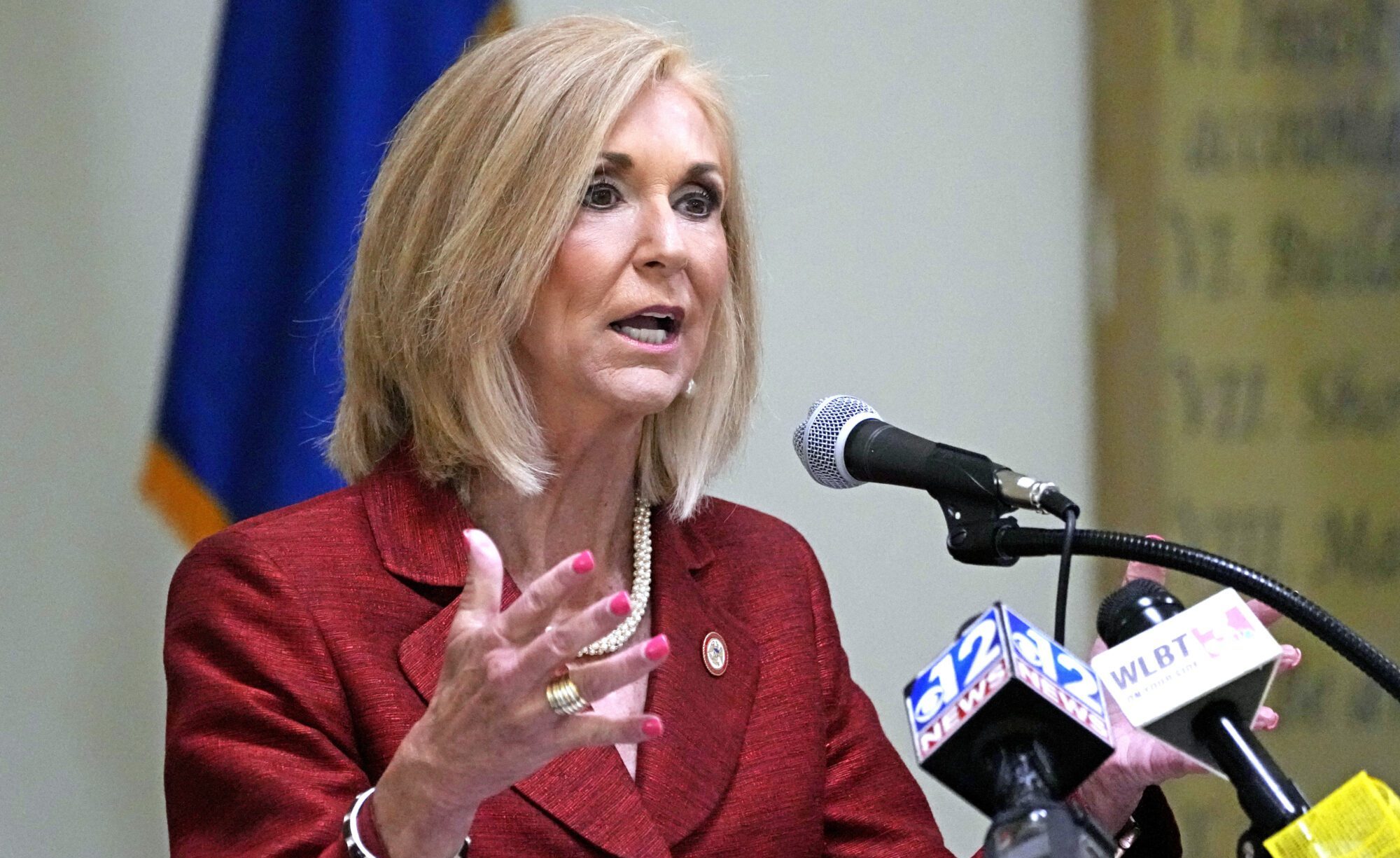
Mississippi Attorney General Lynn Fitch emphasized the vital role of correction officers and staff during an Officers Memorial Service at the Central Mississippi Correctional Facility in Pearl, Mississippi, on May 9, 2023. The event honored individuals who lost their lives in the line of duty. In her remarks, Fitch joined over 20 other attorneys general in addressing the growing concern regarding crime orchestrated from within prison walls.
Combatting Contraband Cellphones
On Wednesday, Fitch announced her collaboration with fellow attorneys general to urge the Federal Communication Commission (FCC) to reconsider its ban on cellphone jamming technology in correctional facilities. “Contraband cellphones are a significant issue in prisons in Mississippi and across the nation,” Fitch stated. “These devices present a severe threat, enabling inmates to engage in criminal activities and coordinate violence while incarcerated.”
Fitch welcomed the FCC’s willingness to explore solutions to this pressing security challenge, highlighting the importance of equipping states with necessary tools to manage the risks associated with contraband communication devices.
Current FCC Restrictions
The FCC currently prohibits the use of jamming technology, with restrictions that extend to all forms of radio communications, including cellular services and GPS. An April 2020 FCC update clarified that local law enforcement lacks independent authority to employ jamming equipment, except in limited situations authorized for federal law enforcement agencies.
Support for Change
Fitch and her peers assert that permitting jamming systems within correctional facilities could effectively cut off inmate access to external communications. “Inmates frequently utilize smuggled phones to manage criminal enterprises, threaten witnesses, and incite violence both inside and outside prison walls,” the attorneys general noted in their letter to the FCC. “This proposed rulemaking would empower correctional administrators to establish jamming systems disrupting unauthorized communications without impacting legitimate services beyond prison boundaries.”
Alongside this initiative, federal legislation has been introduced in both the U.S. Senate and House to grant states the authority to implement cellphone jamming in correctional environments.
Other states joining the call include Arkansas, Alabama, Alaska, Georgia, Iowa, Kansas, Kentucky, Louisiana, Missouri, Montana, Nebraska, North Dakota, Ohio, Oklahoma, Pennsylvania, South Carolina, South Dakota, Tennessee, Texas, Utah, Virginia, and West Virginia.
