


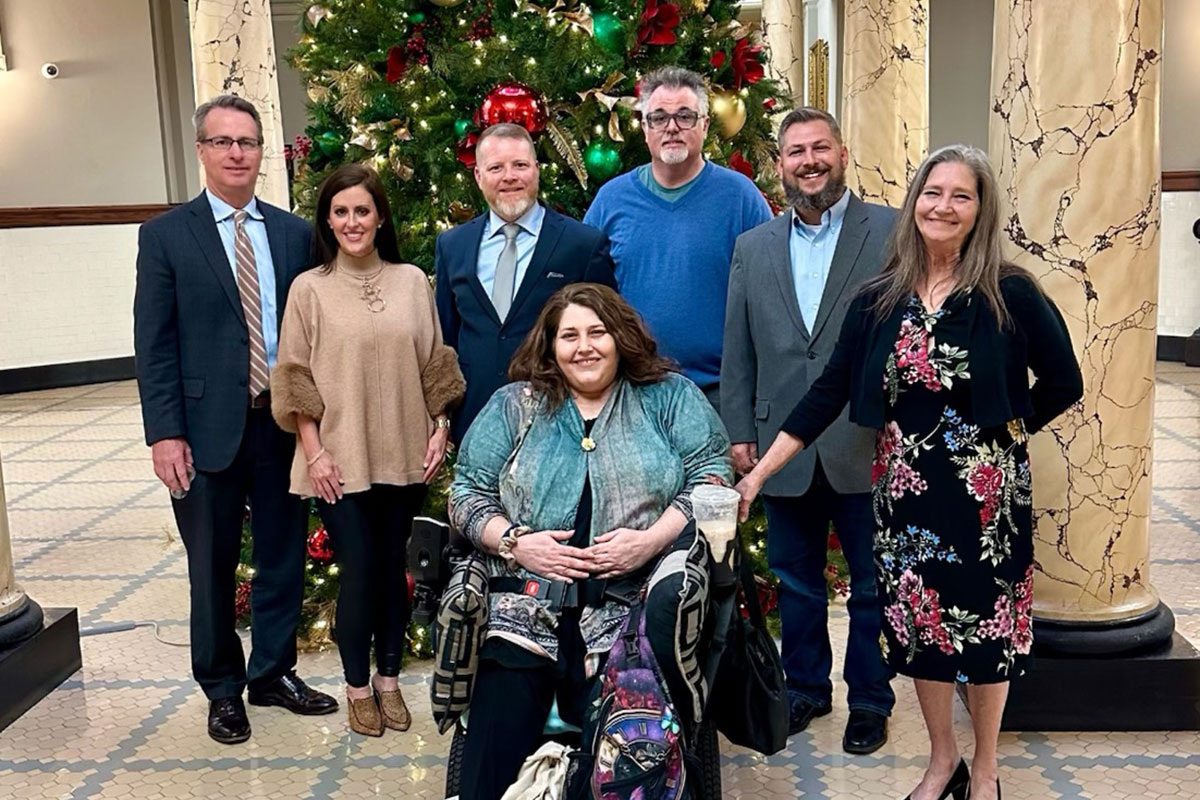
Medical cannabis patient Becky Henderson, who faced a spinal cord injury from a car accident at 21, navigating life in a motorized wheelchair, attended the Mississippi Medical Cannabis Advisory Committee meeting on December 20, 2023. Despite her challenges, she actively advocated for enhancements to the state’s medical marijuana program, focusing on accessibility for individuals with mobility impairments.
Proposed Changes to Cannabis Access
Henderson suggested that Mississippi allow dispensaries to implement patient delivery services and drive-through options specifically designed for those with mobility issues. She emphasized the need for telehealth capabilities for all medical cannabis patients, including during initial doctor’s visits, stating, “People who have mobility issues are hesitant to join the program because they can’t get out of the house.”
The committee’s responses reflected concerns for patients’ logistical challenges, particularly for those limited in their ability to travel. The members proposed recommendations to lawmakers, including allowing dispensaries to deliver to facilities such as hospitals and nursing homes.
Committee Composition and Powers
The Mississippi Medical Cannabis Advisory Committee consists of nine members who must convene at least biannually, as mandated by Section 41-137-63 of Mississippi’s Constitution. It includes representatives from the Mississippi Department of Revenue, the Mississippi State Department of Health, and stakeholders from the medical cannabis sector. While the committee can suggest changes, they do not have the power to alter legislation directly.
Committee Chairman Jeff Webb expressed optimism regarding the legislature’s responsiveness to the proposed changes, as discussions commenced about a bill aimed at revising the state’s cannabis regulations.
Recommendations for Cannabis Use
During the meeting, Henderson highlighted her difficulties in obtaining cannabis, as state law restricts purchases to weekly supplies. The committee responded favorably by adopting a resolution to recommend allowing patients to acquire their monthly allowances in one visit. Additionally, they supported telehealth appointments for homebound patients during their initial visits and follow-up check-ups.
Furthermore, the committee endorsed the inclusion of anxiety and insomnia among the qualifying conditions for medical cannabis usage, as well as the establishment of clear regulations regarding intoxicating hemp products available in gas stations and CBD shops.
Concerns Regarding Medical Treatment
Henderson also addressed a troubling issue affecting many patients: the reluctance of some doctors to treat individuals who use cannabis for medical purposes. She recounted her experiences with palliative care doctors who refused to treat her due to her cannabis use, prompting her to state, “They shouldn’t be allowed to discriminate against cannabis patients.”
Support for Henderson’s position was echoed by members of the Mississippi Cannabis Patients Alliance, who noted similar experiences of discrimination when seeking pain management support.
Advocating for Home Grow Legislation
Throughout her advocacy, Henderson has argued for patients’ rights to cultivate cannabis at home, citing its potential to reduce costs for those with limited income. Despite her efforts, conversation around this proposal is still in its early stages, with Webb indicating that the state’s burgeoning medical cannabis program still requires time to solidify its structure.
Current Landscape of Medical Cannabis in Mississippi
As of December 20, 2023, Mississippi’s medical cannabis industry reported over 31,000 registered patients and 313 dispensaries, with significant revenue accrued from sales and application fees. Current regulations allow patients to possess specific amounts measured in Mississippi Medical Cannabis Equivalency Units, though the committee proposed a shift to a simpler gram measurement for ease of access.
With the constant evolution of Mississippi’s medical cannabis landscape, various stakeholders have expressed their satisfaction with the ability to amend regulations regularly, thereby aligning with the community’s needs and market dynamics.
