


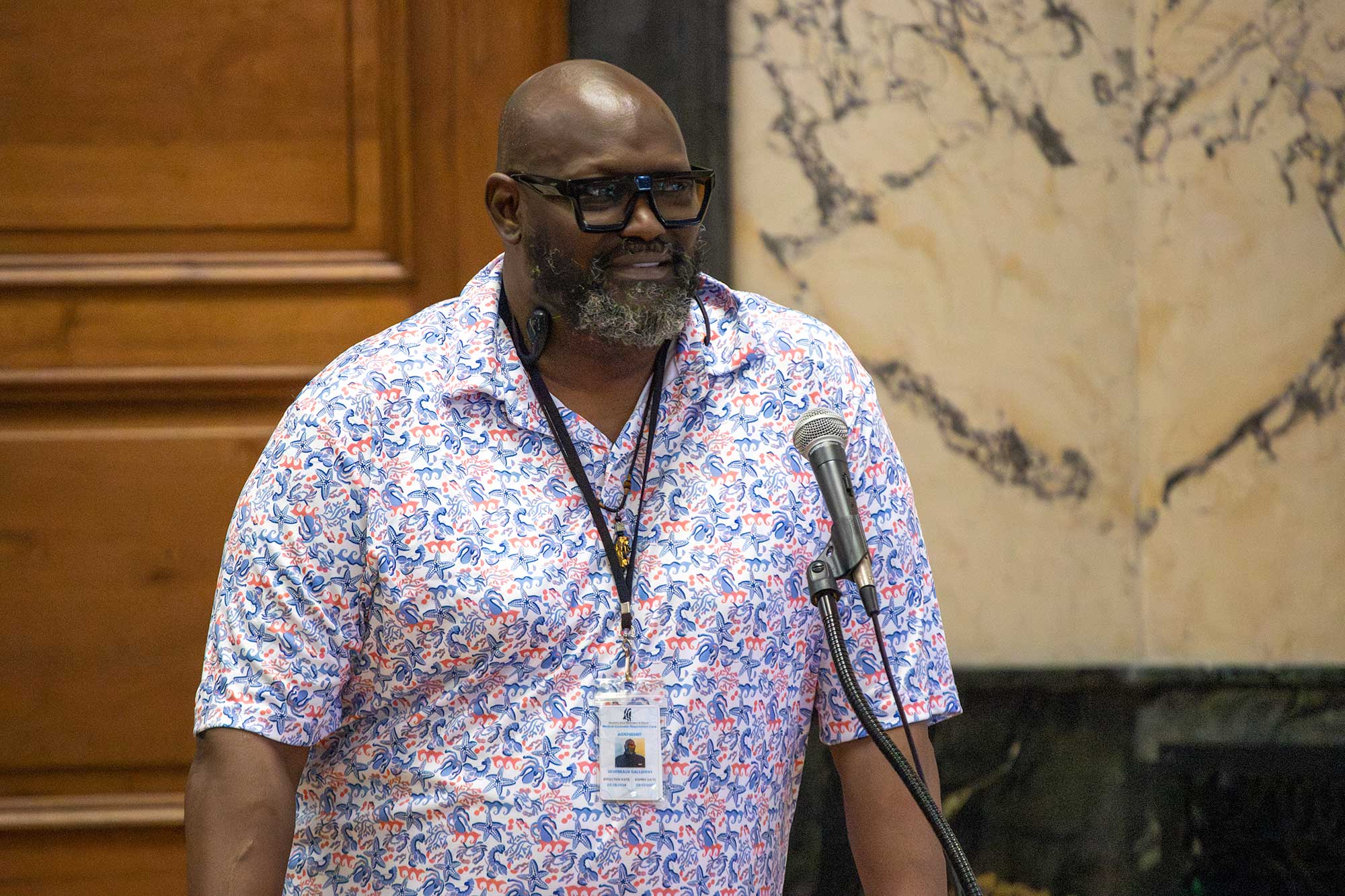
Devereaux Galloway, a Gulf War veteran who faced paralysis and post-traumatic stress disorder after his service, relied heavily on prescribed opioids—averaging around 150 pills per month—following his spinal surgery in 2019. Speaking with the Mississippi Free Press on August 28, Galloway reflected on his treatment, saying, “Of course, I was on opioids. The Department of Veterans’ Affairs was giving them to me. You just do what the doctors tell you: ‘Just take them for pain as needed.’ Well, ‘pain as needed’ was constant.” This reliance led to adverse effects including depression and weight gain.
In December 2022, Galloway enrolled in Mississippi’s medical cannabis program, starting his treatment with Rick Simpson Oil, a potent cannabis concentrate. Since then, he has completely eliminated opioids from his regimen. Despite lacking feeling in his right leg, he has regained the ability to walk unaided. Galloway noted the benefits of cannabis, stating, “You’re not just out of your world… You just don’t have any pain. You can feel stuff. Food tastes better. Your hearing is more acute.”
Though Galloway no longer uses RSO due to its potency, he continues to smoke cannabis daily. As a host of the 20past4 podcast, he educates others about medical cannabis and addresses the stigma that many face, especially veterans hesitant to explore cannabis options. “Because of medical cannabis in Mississippi, it allowed me another option. Today, I’m proud to say that I don’t take any opioids at all,” he stated at a Medical Cannabis Advisory Board meeting.
Policy Proposals for Better Access
During the same meeting, Henry Crisler, executive director of the Mississippi Medical Cannabis Association, presented three policy initiatives aimed at enhancing the accessibility of medical cannabis in the state. He emphasized the need to uphold stringent testing, labeling, and packaging standards for cannabis products, while recommending an increase in the potency limit for medical cannabis flowers from 30% to 40% and the removal of limits on infused and concentrated products.
“There’s a certain subset of patients who seek a higher dosage or level of relief, and those patients currently struggle to achieve that with the existing potency caps,” Crisler explained. He also highlighted the challenge presented by the scarcity of certified medical-cannabis practitioners in 35 counties, which can hinder patient access to the program.
Crisler proposed extending the recertification period for medical-cannabis patients from one year to two, arguing that many underlying medical conditions persist and do not require annual reassessment. “We believe that Mississippi practitioners are licensed, trained, and capable of determining the best treatment options for their patients without needing to rely on an arbitrary list of conditions determined by a legislature,” he stated.
Addressing Stigma and Promoting Awareness
Diana Odom, who joined the medical-cannabis program in early 2025 due to Ehlers-Danlos syndrome, expressed her concerns about enduring stigma despite the relief she experiences from cannabis. “My medical marijuana treatment plan has changed me… I finally feel like there is some hope in my life,” she shared during the board meeting. Elizabeth Feder-Hosey, director of Mississippi Patient Voices, emphasized the importance of dispelling misconceptions and proposed public service announcements to increase awareness of the medical-cannabis program.
“About 15-20% of people coming to our events did not know there was a program,” Feder-Hosey noted, advocating for a focused effort to educate the community about the available resources and benefits of medical cannabis.
Challenges in Patient Enrollment
Data from River Remedy Dispensary showed that about 55% of patients renewed their medical-cannabis cards within a year; however, there remains a significant portion—45%—who do not. Crisler indicated that this issue could be partially due to administrative challenges, complicating the straightforward delivery of patient care.
Rep. Lee Yancey expressed his commitment to refining the medical-cannabis program, emphasizing that it should be accessible and not burdensome for those who need it. He has engaged discussions about potential changes to card renewal requirements and potency levels for concentrates.
Market Developments
Henry Crisler reported a 41.5% increase in active patients in Mississippi’s medical-cannabis program, with numbers climbing from 42,599 in 2024 to 61,592 by August 2025. Despite this growth in participation, the overall number of industry operators has seen a slight decline as market consolidation begins to take shape. “The enthusiasm for the program is waning a little bit,” Crisler observed, noting that packaged cannabis flowers currently dominate sales, comprising 52% of the market.
As legislation and policy continue to evolve, stakeholders in the Mississippi cannabis industry remain focused on enhancing patient access, education, and addressing ongoing stigmas associated with cannabis use. The future of Mississippi’s medical-cannabis framework will depend on collaborative efforts to reinforce the legitimacy of the program while broadening opportunities for those in need of relief.
