


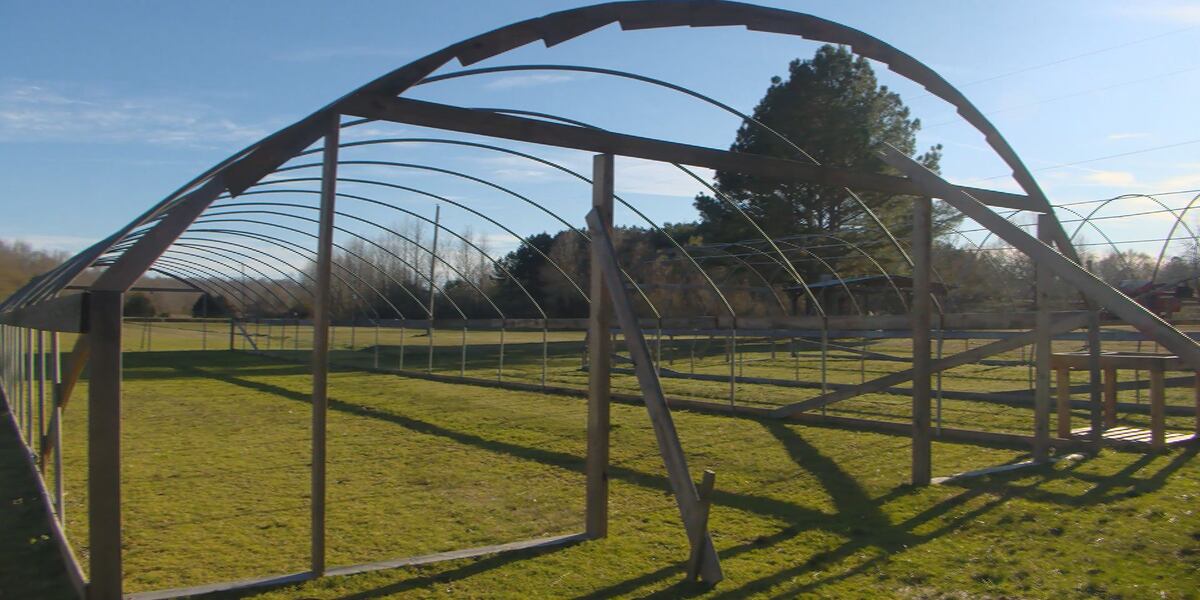
NORTH MISSISSIPPI (WMC) – Over a month has passed since the Mississippi Medical Cannabis Act was enacted, yet potential cannabis growers in the state are facing uncertainty about how to proceed with their operations. Ambiguities in the legislation have left many questioning whether greenhouses qualify as indoor or outdoor growing environments. The law strictly prohibits outdoor growing, adding complexity to the situation.
“We fought so hard for these last two years to get something passed,” said Zack Wilson, a member of We Are the 74. “Now that we have a law, we’re facing another set of hurdles.” Wilson, a Byhalia resident, had been preparing to build greenhouses on his property but paused construction upon realizing that greenhouses are not explicitly defined in the law.
Legislative Ambiguities
The 445-page bill defines a “Cannabis cultivation facility” as an entity licensed by the Mississippi Department of Health that grows, cultivates, and harvests medical cannabis in a securely enclosed area. Wilson asserts that greenhouses, which are completely enclosed, should be classified as indoor spaces, despite concerns from some legislators regarding their security relative to traditional buildings.
“A greenhouse is totally enclosed, so as far as I’m concerned that is indoor,” Wilson noted. “There are locks on the doors, just like any other building. If someone were to find my property, they would have to fly over it to detect it.”
Similarly, Todd Franklin, owner of Franklin Farms, expressed frustration over the lack of clarity. He constructed two greenhouses before Initiative 65, which was designed to regulate cannabis sales in Mississippi, was overturned by the state Supreme Court. He is now pausing further construction, awaiting definitive answers on greenhouse classification.
Attempts to reach the Mississippi Department of Health for clarification on greenhouse regulations have yielded no clear response. A spokesperson indicated, “While the program is in development, I encourage you to visit our website and read the bill for answers.”
Shifting Strategies
As the June 2 deadline for cannabis growing and processing license applications approaches, Franklin has decided to shift his approach, opting to construct traditional metal structures instead. “We want to be ready and operational when the state says we can apply for licenses,” he said. “Either spend the money or fall behind.” He will keep the greenhouse frames intact, hopeful for clarification on the indoor classification.
Further complicating matters, Wilson had plans to open a dispensary in Downtown Byhalia, converting the site of a former liquor store. He believed he had complied with zoning regulations after obtaining waivers from local churches, which allowed him to override the standard distance restrictions. However, one church is located just 15 feet short of the revised limit.
“I’m 15 feet short of the 500 required by state law,” Wilson lamented. “The community supports this, and it would enhance property values and beautify the area.” Wilson is also tracking proposed amendments in the state legislature aimed at granting localities more discretion in zoning dispensaries.
As industry stakeholders await clearer guidelines from the Mississippi Department of Health, the future of greenhouse operations and dispensary locations remains uncertain.
