


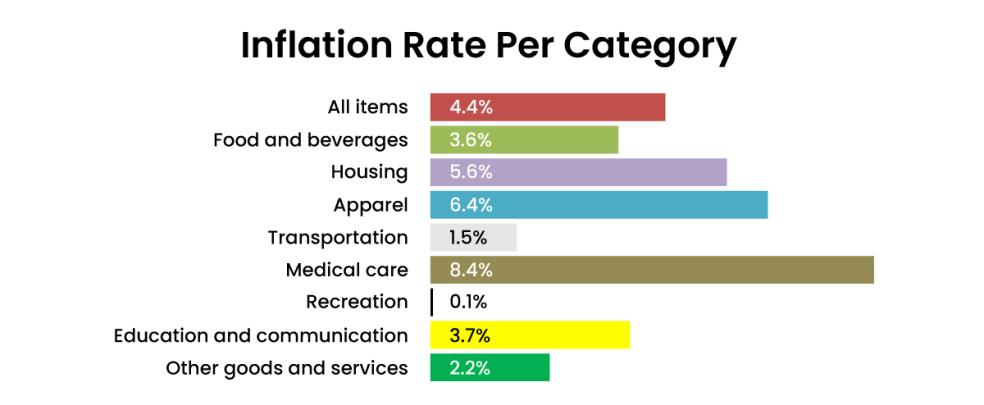
The local Consumer Price Index (CPI) in Humboldt County reflects fluctuations in the prices of essential goods and services, enabling the calculation of the area’s inflation rate. This index tracks expenses from basic items like eggs and meat to housing. For the period from February 2024 to February 2025, the statewide inflation rate in California was reported at 3.3%, as per the State of California Department of Industrial Relations. It’s crucial to recognize that this statewide figure is based primarily on consumer prices in urban centers such as San Francisco, Los Angeles, and San Diego.
As of April 2025, the national inflation rate was recorded at 2.3%, according to the US Bureau of Labor Statistics (BLS), which monitors prices of tens of thousands of goods across the country. In contrast, the local CPI for Humboldt County was derived from the prices of over 500 products, whereas the national CPI utilizes data from more than 60,000 items. This discrepancy contributes to a potentially “noisier” inflation rate in Humboldt, as explained by Erick Eschker, chair of the Economics department and director of the Humboldt Economic Index.
Challenges of Inflation in Rural Areas
Rural communities often face heightened inflation rates due to various factors, including increased transportation costs, limited market competition, and greater vulnerability to supply chain disruptions. “State and national inflation rates typically focus only on prices in urban areas—but millions of Californians live in rural regions,” Eschker noted. Humboldt students are assisting in addressing this gap by tracking local price changes. This hands-on experience not only enriches their education but also fosters community connections and raises awareness of the unique economic challenges that affect rural households.
Trends in Local Prices
The CPI data indicates significant increases across several categories, highlighting the local economic landscape:
- Medical care: 8.4% (highest increase)
- Apparel: 6.4%
- Housing: 5.6%
- Education and communication: 3.7%
- Food and beverages: 3.6%
- Other goods and services: 2.2%
- Transportation: 1.5%
- Recreation: 0.1% (lowest increase)
For the first time, students have included cannabis pricing in the CPI, gathering data on a limited range of products such as flower, concentrates, edibles, and pre-rolls. The overall cannabis prices showed a marginal increase of just 0.2%, according to the index. This research is part of the annual CPI report compiled by the Cal Poly Humboldt Economics department.
Since 2013, students have collected hundreds of local prices each spring to determine the local inflation rate. In the previous year, the scope of the study expanded from 287 goods and services to 529, enhancing the accuracy and reliability of the data in line with the BLS’s CPI. As Eschker emphasizes, this data serves not only as a tool for tracking consumer costs over time but also as a means to gain a deeper understanding of the local economy and the specific trends that influence it.
