

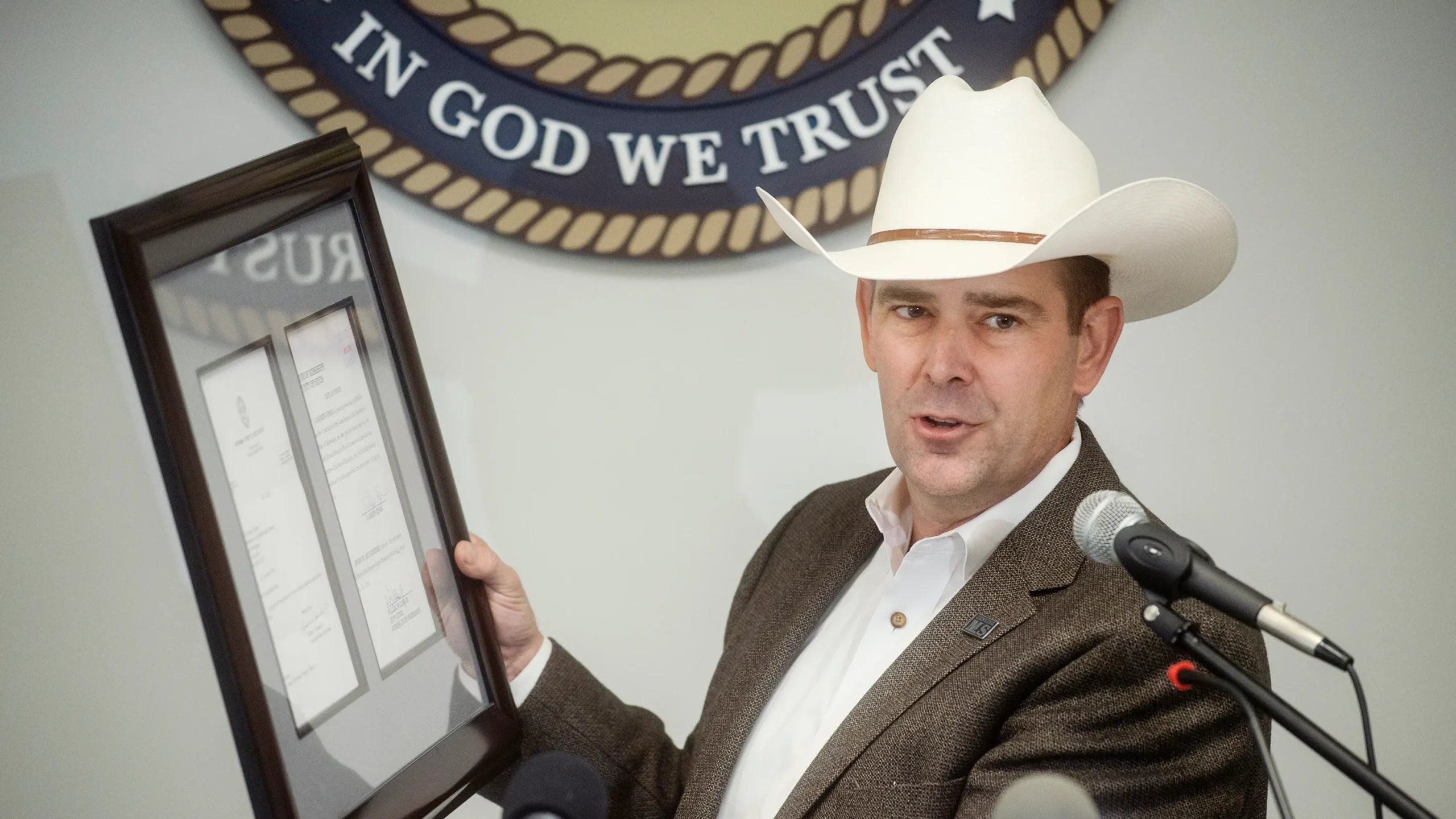
Mississippi Agriculture and Commerce Commissioner Andy Gipson expressed his strong opposition to the state’s proposed medical marijuana program during a news conference. Gipson called for the program to be managed by another agency, ideally the Mississippi Department of Health, emphasizing that the Mississippi Department of Agriculture and Commerce (MDAC) should not be involved in cannabis regulation.
“It’s not what my oath of office required, and it’s not what the people in Mississippi elected me to do, to be the marijuana kingpin of the state of Mississippi,” Gipson stated, reinforcing his stance on the issue.
Concerns Over Regulatory Oversight
As discussions surrounding the proposed marijuana bill intensify, Gipson’s opposition has become more pronounced. He referred to an agreement reached by Lt. Gov. Delbert Hosemann and House Speaker Philip Gunn, which would place substantial regulatory responsibilities on the MDAC, including licensing, inspection, and oversight of cannabis cultivation and processing facilities.
Gipson estimated the implementation costs for these oversight responsibilities could reach approximately $2.9 million, raising concerns about budget implications. He rhetorically questioned, “Who’s gonna pay for that?” highlighting that the legislature often initiates programs without ensuring proper funding for their enforcement.
The bill does allow for the MDAC to delegate these responsibilities to a third party, which could alleviate some burdens but not all.
Impacts of Initiative 65
Gipson is currently in discussions with lawmakers about potentially amending the bill to better align with Initiative 65. This voter-approved initiative from November 2020 sought to place medical marijuana regulation under the Department of Health but was invalidated by the state Supreme Court. Under Initiative 65, all revenue generated from the medical marijuana program was designated to support its own functions rather than being redirected to other initiatives such as education or infrastructure.
Logistical Challenges and Future Actions
Adding to the complexity, Gipson pointed out the proposed 60-day timeline for rolling out the program should the bill be passed. This acceleration would require collaboration among three state agencies—MDAC, the Department of Health, and the Mississippi Department of Revenue—which Gipson characterized as “impractical.” He reiterated the challenges of funding and logistics, stating, “It’s unworkable.”
Gipson is scheduled to testify before the Mississippi Legislative Black Caucus, having been notably absent from summer hearings. Despite this, support for the bill appears to be growing among Democratic lawmakers, according to Senate Minority Leader Derrick Simmons and House Minority Leader Robert Johnson, who indicated a readiness to vote in favor of the legislation.
Should the bill pass in its current form, Gipson has indicated that he may explore all available options, including legal action against the legislature, to challenge the new regulatory requirements he opposes.
However, the fate of this legislative agreement and the associated concerns remains contingent on Governor Tate Reeves calling a special session of the legislature to address the medical marijuana initiative. Governor Reeves has signaled that such a session will be convened once a consensus is reached, though he has also indicated no plans to address COVID-19 relief measures at this time.
For further reading on the implications and developments of Mississippi’s medical marijuana legislation, you can refer to the official state website.
