


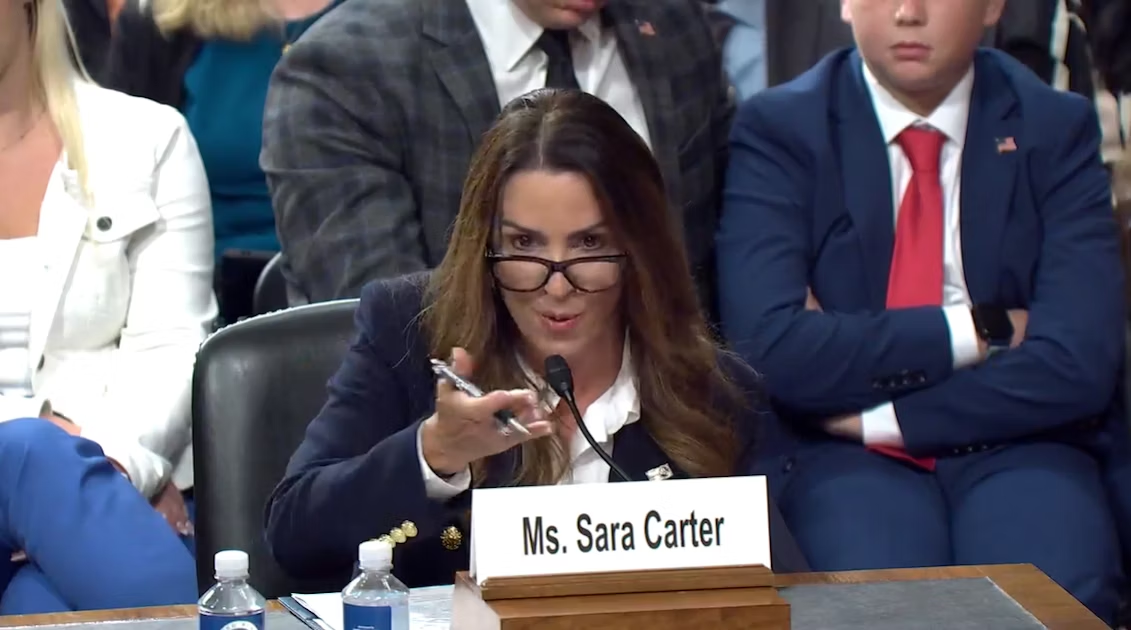
In the evolving landscape of cannabis legislation, President Donald Trump’s nominee for the top drug policy adviser role, Sara Carter, has refrained from taking a definitive stance on cannabis rescheduling and the legalization of medical cannabis during her confirmation process. In her responses to U.S. senators, she emphasized her commitment to adhering to federal laws.
Senate Inquiry on Cannabis Policy
Carter, the president’s choice for director of the White House Office of National Drug Control Policy (ONDCP), responded to written questions from Senate Judiciary Committee members following her nomination hearing on September 17. Senator Dick Durbin (D-Ill.) referenced a past podcast where Carter expressed support for medical marijuana legalization. Despite this, she reiterated her intent to follow federal laws should she be confirmed.
“If confirmed as director, I will comply with all federal laws and fulfill all statutory responsibilities of the ONDCP,” Carter stated, adding that she would collaborate with relevant agencies to ensure a thorough examination of facts and evidence concerning cannabis policy actions.
Rescheduling Cannabis: A Delicate Issue
Senator Cory Booker (D-N.J.) also inquired about the rescheduling of cannabis, referencing a proposal initiated under the Biden administration. He highlighted that the rescheduling process requires a recommendation from the Department of Health and Human Services (HHS) after a scientific evaluation. Booker pressed Carter on whether she would prioritize HHS’s recommendations over the Drug Enforcement Administration’s (DEA) opinions.
In her response, Carter maintained her previous statements, focusing on her commitment to the existing process under the Controlled Substances Act (CSA). She emphasized the role of scientists and doctors in evaluating substances, reinforcing her position of working with interagency stakeholders.
The Impact of Federal Restrictions
Carter’s cautious responses come against a backdrop of federal restrictions that limit the ONDCP’s ability to promote the legalization of Schedule I substances until they receive FDA approval. This has implications for the burgeoning cannabis industry in states like Mississippi, where legislation continues to develop. Despite recent efforts by U.S. House Representatives to introduce the Evidence-Based Drug Policy Act of 2025, which aims to remove such restrictions, clarity on cannabis rescheduling remains elusive.
Looking Ahead: Administration’s Stance on Cannabis
Trump has previously indicated that his administration would determine the cannabis rescheduling question “over the next few weeks,” but this timeline has yet to materialize. As Mississippi’s cannabis market expands, uncertainty around federal policy could impact local opportunities for businesses and consumers alike.
As discussions on cannabis legalization evolve, the cannabis industry remains watchful of regulatory movements at both federal and state levels, seeking clearer pathways for growth and reform. The relevance of these developments cannot be overstated, as Mississippi looks to navigate its unique position within the national conversation on cannabis policy.
