


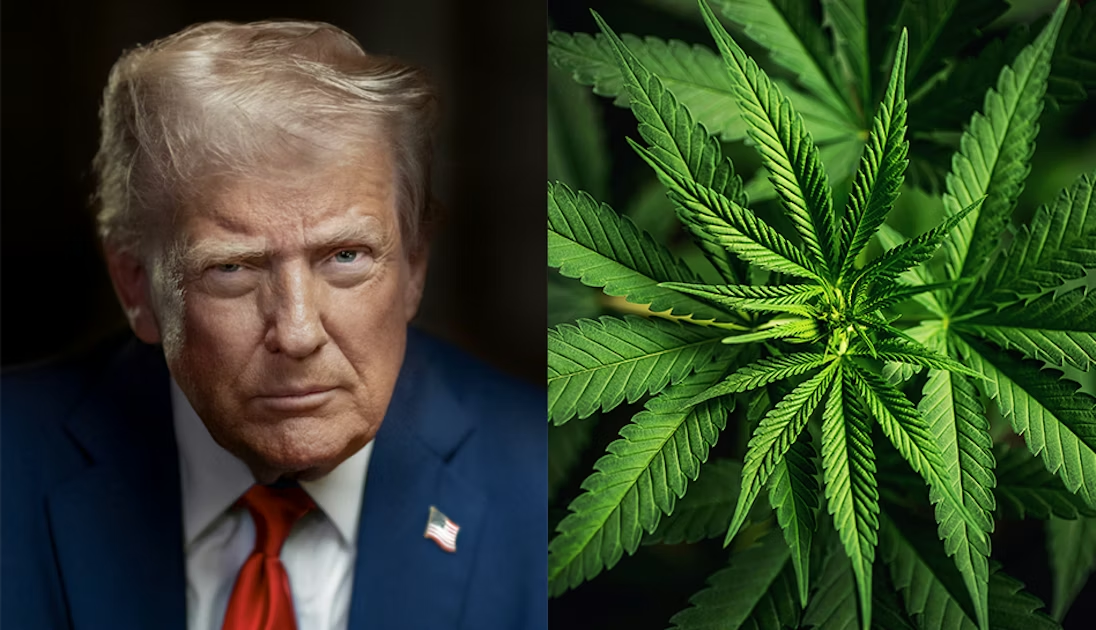
This article was updated on Nov. 13 to include additional viewpoints from industry stakeholders. President Donald Trump signed legislation on Nov. 12 to end the longest government shutdown in U.S. history. However, this move has raised significant concerns regarding the hemp industry, as it has been perceived as a detrimental blow to intoxicating hemp products.
Shortly after the U.S. House voted 222-209 on Nov. 12 to pass a Senate-approved appropriations package to fund the federal government through Jan. 30, President Trump signed the bill, effectively reopening the government after a 43-day shutdown.
Legislative Details
The continuing resolution funds the government for the next 2.5 months and includes three full fiscal year 2026 appropriation packages related to agriculture, military and veterans affairs, and the legislative branch. Notably, the 141-page agricultural spending bill contains language that affects hemp products.
The resolution passed largely along party lines, with all but six Democrats voting against it. Only two Republicans, Reps. Thomas Massie of Kentucky and Greg Stuebe of Florida, voted against the bill, with Massie expressing particular concern over the hemp-related provisions that recriminalize certain consumable hemp THC products.
Under the new legislation, hemp-derived cannabinoid products will be federally illegal starting Nov. 13, 2026, if they meet certain criteria, including:
- Cannabinoids synthesized or manufactured outside the plant (such as delta-8 THC)
- Cannabinoids not naturally produced by the plant (like HHC)
- More than 0.3% total THC (including THCA) or similar cannabinoids
- More than 0.4 milligrams of total THC per container
The U.S. Food and Drug Administration is required to publish a list of natural and synthetic cannabinoids within 90 days and define what constitutes a “container.” These provisions aim to close perceived loopholes in the 2018 Farm Bill that permitted the growth of intoxicating hemp products outside regulatory frameworks.
Industry Reaction
Sen. Rand Paul, R-Ky., attempted to amend the bill to remove the hemp provisions, but the amendment was tabled. Massie’s objections centered around the devastating impact these regulations would have on hemp farmers in Kentucky. He noted that many farmers feel lost and are unsure how to move forward given the changes.
Stuebe’s opposition stemmed from provisions allowing GOP senators to “sue over Arctic frost,” which he criticized as self-serving. While Massie was one of 13 House Republicans opposed to the hemp provisions, the concerns did not prevent the funding package from passing.
Future of Hemp Regulation
The implementation of the new hemp provisions will be delayed for one year, allowing Congress to potentially engage in further discussions about regulatory pathways, including aspects such as age restrictions, packaging, labeling, and testing standards for intoxicating products. The U.S. Hemp Roundtable (USHR) has called for a focus on regulation rather than outright bans, emphasizing that over 95% of all hemp products could be impacted.
Many industry stakeholders have different perspectives on the implications of these changes. For instance:
Michelle Rutter Friberg, NCIA: “Congress’s inclusion of a ban on hemp-derived THC products highlights an unsustainable approach to cannabis governance.”
Anthony Coniglio, NewLake Capital Partners: “Closing the hemp loophole aligns federal policy with public sentiment, which favors legalization and responsible regulation.”
Chris Lindsey, ATACH: “The bill clarifies the distinction between intoxicating and nonintoxicating products, an important step toward consumer safety.”
As Mississippi moves forward in its cannabis regulatory landscape, these changes at the federal level could prompt revisions to state laws governing hemp and cannabis products. The evolving federal definitions may necessitate a reassessment of regulations aimed at ensuring consumer safety and product integrity.
The recent legislative actions represent a unprecedented shift that could redefine the hemp industry in Mississippi and beyond, emphasizing the need for clarity and responsible governance in a sector that has shown significant promise.
