


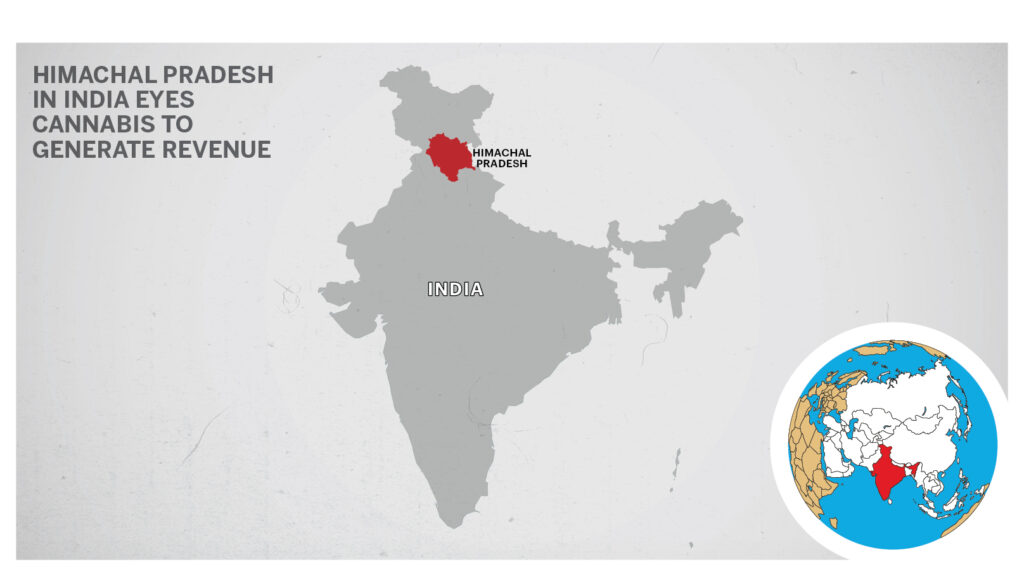
PUNE, India — Himachal Pradesh, a small mountain state in northern India, has set an ambitious goal to generate INR 18,000 crores ($2.5 billion) annually through the controlled cultivation of cannabis. In a recent state budget meeting, Chief Minister Jai Ram Thakur emphasized the high quality of cannabis produced in the region and highlighted the significant potential for its regulated cultivation.
Cannabis Legalization and Challenges
This announcement signals a progressive step amidst years of political struggle for cannabis legalization in India. However, the absence of comprehensive laws and persistent cultural taboos may pose immediate challenges. “Cannabis extract is utilized in pharmaceuticals for treating conditions like cancer and Alzheimer’s,” said Sunder Singh Thakur, a legislator from Kullu district, who has long advocated for cannabis legalization in the state. “It will create job opportunities when they are critically needed due to pandemic-related job losses.”
Tourism and Cannabis Culture
The Kullu-Manali district attracts 3.5 million domestic and international tourists annually. While known for its scenic beauty, many visitors come for its cannabis resin products such as hash, hashish, charas, or bhang. Hash is derived from the cannabis plant’s resin and is noted for having high potency. In 2018, Himachal Pradesh’s hashish output was estimated between 100-150 tons, according to a global cannabis research paper.
Legal Framework and Future Prospects
Under the Narcotic Drugs and Psychotropic Substances Act of 1985, cannabis cultivation, possession, and use are illegal in India. However, the act includes provisions for individual states to “permit and regulate” cannabis cultivation and related activities. This framework facilitated Himachal Pradesh’s recent announcement regarding controlled cultivation.
Thakur noted that discussions on the legal framework for licensing cultivation have not yet occurred. “It’s a complex process, especially since thousands of hectares in the state are currently under illicit cultivation,” he stated. “Research on suitable cannabis varieties for cultivation and development is ongoing.”
Following a Growing Trend
Himachal Pradesh is now the third Indian state, following Uttarakhand and Madhya Pradesh, to legalize cannabis cultivation. Uttarakhand legalized the cultivation of cannabis plants in 2015, allowing only strains with low THC concentrations. Similarly, Gujarat exempted bhang from its list of “intoxicating drugs” in 2017.
As India gradually acknowledges the industrial and medicinal advantages of cannabis, numerous hemp-related startups are emerging across the country. “The legal status regarding which cannabis varieties can be cultivated remains ambiguous due to insufficient research on native Indian strains,” explained Hardik Jain, CFO of Gohemp Agroventures. His startup manufactures organic construction materials from hemp fiber.
Historical Context and Future Outlook
The cannabis plant has significant cultural and mythological ties in India, often associated with Hindu deities. Despite the 1985 ban on cannabis, observers noted that the decision was influenced by external pressure, particularly from U.S. drug policy. Recent moves by 27 of 53 members of the UN Commission on Narcotic Drugs, including key nations like India and the U.S., to relax cannabis restrictions indicate an evolving global perspective.
Consumption rates of cannabis in India have surged, with a 2018 study ranking New Delhi and Mumbai among the top consumers worldwide. Yet, practical developments in cannabis policy and legislation have been slow. “In Uttarakhand, our focus is primarily on hemp fiber and seeds, with no legal initiatives for broader varieties,” noted Kabir Singh, a member of Uttarakhand’s entrepreneurial development board. He reiterated that the growing demand for hemp products could prompt legislative changes as states begin to see the economic benefits. “While the journey is lengthy, we hope to fully realize the potential of cannabis cultivation in India.”
As legalization unfolds in India, the cannabis industry remains a crucial potential driver of economic growth, with implications for employment and innovation within the sector.
