
Some of the largest marijuana companies in the U.S. are funding a political group that is spending to reelect Republican lawmakers who have opposed easing federal cannabis laws, according to Federal Election Commission filings reviewed by Marijuana Moment.
America First Agriculture Action Inc., a super PAC that shares a treasurer with President Donald Trump‘s main super PAC, MAGA Inc., has spent nearly $1.8 million on ads supporting 11 House Republicans in competitive races. Almost all of its money comes from the cannabis industry.
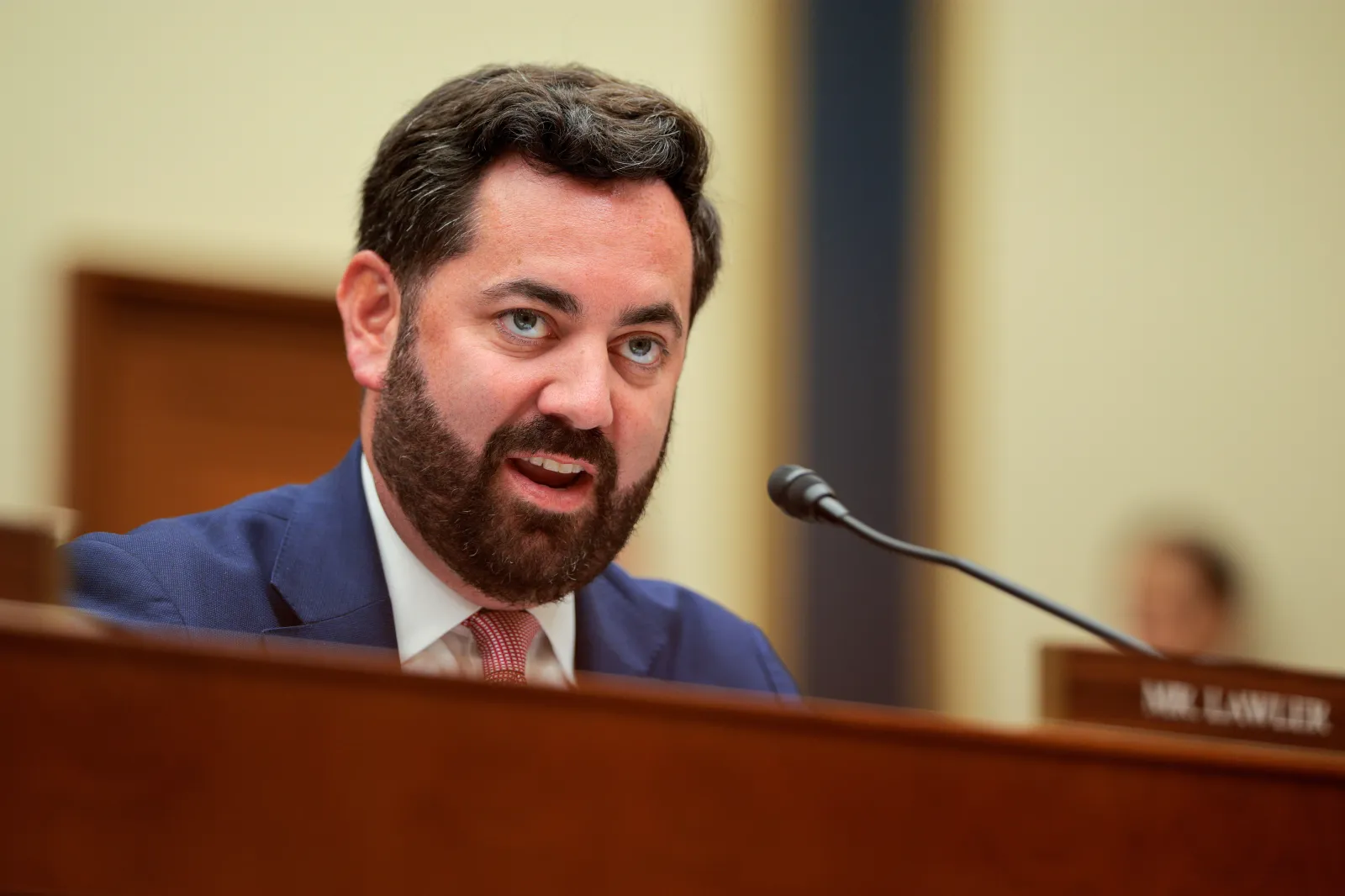
One of those Republicans is New York Representative Mike Lawler, who said during a televised debate last week that the state’s legal marijuana law is “hurting” local communities.
Newsweek reached out to America First Agriculture Action and Lawler’s office for comment Monday.
$11.5 Million From Cannabis Companies
The spending comes weeks before the midterm elections, which will determine control of the House, as the cannabis industry pushes the Trump administration to complete the federal rescheduling of marijuana.
Trulieve, Curaleaf, Verano and Vision Management Services, a subsidiary of Green Thumb Industries, each gave $2.5 million to America First Agriculture Action in June, according to FEC records first reported by Marijuana Moment and reviewed by Newsweek. Ascend Wellness Holdings gave $500,000, while Arboretum Bidco gave $1 million, bringing the total to $11.5 million.
The contributions came weeks after the Justice Department announced it was moving forward with the federal rescheduling of marijuana.
The American Rights and Reform PAC, a cannabis-backed committee whose listed treasurer is Curaleaf executive Matt Harrell, gave America First Agriculture Action another $1.5 million last year, Marijuana Moment reported mid-September. The group also gave $2.05 million to MAGA Inc.
Including those contributions, cannabis-linked donations to Trump-aligned committees total at least $15.05 million.
Charles Gantt is listed as treasurer of both America First Agriculture Action and MAGA Inc.
Ads That Never Mention Marijuana
In September, the PAC began running ads for 11 Republican representatives: Tom Barrett of Michigan, Nick Begich of Alaska, Rob Bresnahan of Pennsylvania, Juan Ciscomani of Arizona, Gabe Evans of Colorado, Brian Fitzpatrick of Pennsylvania, Jen Kiggans of Virginia, Mike Lawler of New York, Scott Perry of Pennsylvania, Bryan Steil of Wisconsin and Derrick Van Orden of Wisconsin.
Because the ads are independent expenditures, federal law bars the PAC from coordinating them with the candidates’ campaigns. But marijuana does not come up in any of them.
Instead, the spots highlight the lawmakers’ votes to ban stock trading by members of Congress and their support for tax cuts, including measures to end taxes on tips, overtime and Social Security. Puck first reported the spending.
Several of the lawmakers have opposed marijuana reform. Fitzpatrick, Perry and Steil voted against Democratic-led bills to federally legalize marijuana that passed the House in 2020 and 2022. Kiggans voted against legalization while serving as a Virginia state senator. Ciscomani reportedly celebrated the defeat of a 2016 Arizona ballot measure to legalize recreational cannabis.
Most of the other lawmakers arrived in Congress in 2023 or 2025 and have never cast a floor vote on marijuana legalization.
Democrats have said they would take up broader marijuana reform if they win control of the House.
Lawler Called Rescheduling ‘Wrong’
Lawler represents New York’s 17th Congressional District in the Hudson Valley. He faces Democrat Cait Conley, a military veteran, in one of the country’s most closely watched House races.
At a News 12 debate on September 28, the moderator asked whether New York’s legal cannabis law was helping or hurting the local economy and neighborhoods. Conley said helping. Lawler said hurting.
Marijuana Moment, citing the PAC’s latest filings, reported that the group had spent $288,774.79 supporting him.
Lawler has opposed federal rescheduling. Speaking to NewsNation last year, he said: “I think rescheduling marijuana is wrong. The fact is, marijuana is a gateway drug. Most of the people who end up using hard substances start out on marijuana.”
In December, he signed a letter urging Trump to keep marijuana in Schedule I. Texas Representative Pete Sessions and Maryland Representative Andy Harris, both Republicans, led it. Reclassification “will send the wrong message to America’s children, enable drug cartels, and make our roads more dangerous,” the lawmakers wrote.
The letter also warned that rescheduling would hand large marijuana companies a federal tax break, and it called their businesses “addiction-for-profit dispensaries.” Some of those companies are now paying for ads supporting Lawler’s reelection.
Rescheduling Remains Unfinished
Trump backed reclassifying marijuana during the 2024 campaign and signed an executive order in December directing the change.
In April, the Justice Department moved state-licensed medical marijuana and FDA-approved marijuana products from Schedule I to Schedule III of the Controlled Substances Act. Medical operators were freed from Section 280E of the tax code, which bars businesses trafficking in Schedule I or II substances from deducting ordinary expenses.
Recreational marijuana is still in Schedule I. A Drug Enforcement Administration hearing on broader rescheduling was paused last week at the request of opponents.
On Capitol Hill, Republican leaders remain largely opposed. The GOP-controlled House Appropriations Committee voted this year to block federal officials from taking further rescheduling steps, and House Majority Leader Steve Scalise of Louisiana told Marijuana Moment in September that marijuana “is a gateway drug.”
House Minority Leader Hakeem Jeffries of New York has said Democrats would be positioned to act on marijuana laws in the next Congress. Voters in all 11 districts go to the polls on November 3.
America First Agriculture Action had lobbied Trump directly before the executive order, with an ad that closed: “Reschedule cannabis and stack another win, Mr. President.”
How Americans See Marijuana
Most Americans support legalizing marijuana in some form.
A Pew Research Center survey of 8,512 U.S. adults, conducted January 20 to 26, found that 55 percent think marijuana should be legal for both medical and recreational use. Another 33 percent back legalization for medical use only. Just 11 percent said the drug should not be legal at all, a share that has held relatively steady since 2019.
The partisan gap is wide. Sixty-seven percent of Democrats and Democratic-leaning independents favor legalization for both uses, compared with 44 percent of Republicans and Republican leaners. Still, only 16 percent of Republicans said marijuana should be fully illegal. Age matters too: 63 percent of adults under 30 support full legalization, against 34 percent of those 75 and older.
When Pew asked about the effects of legalization in 2024, the question Lawler faced at his debate drew a clear answer. Fifty-two percent of adults said legalizing recreational marijuana is good for local economies, and 17 percent said it is bad. Views on community safety leaned the other way, with 34 percent saying legalization makes communities less safe and 21 percent saying it makes them safer.
Pew found that 53 percent of Americans now live in a state where recreational marijuana is legal, including New York.
Contact Newsweek editors on this story: Jenny Fink and Trevor Davies

Author: MScannaBIZ
MScannaBIZ is here to make sure patients, businesses, and professionals never get left behind. We started in 2022 as a Mississippi cannabis news source, covering the legislation, the licenses, and the launches that shaped the state's emerging industry. As the Mississippi Medical Cannabis Program took shape, so did we, evolving into the state's most comprehensive cannabis platform. Today MScannaBIZ is Mississippi's premier destination for finding licensed dispensaries, booking certified cannabis doctors, discovering deals and events, and staying informed with the latest industry news. With over 300 businesses in our directory and new listings added daily, we're the most complete cannabis resource in the state. Our mission is simple make Mississippi's medical cannabis ecosystem accessible, transparent, and thriving for everyone in it.