

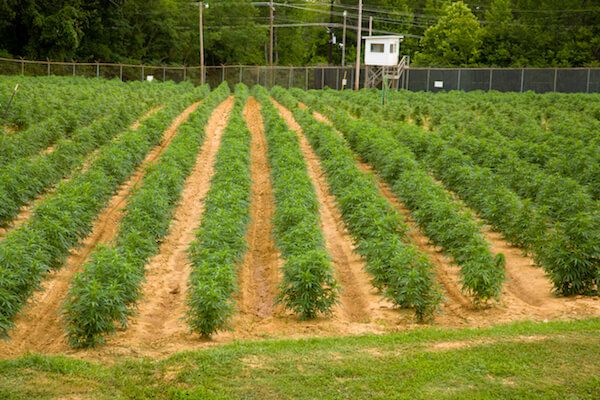
After years of delays, the U.S. Drug Enforcement Administration (DEA) is poised to commence issuing licenses to businesses and institutions for the cultivation of cannabis intended for scientific research. Richard Shain, president of Maridose, a Florida-based entity, anticipates that the licenses will be granted by the first half of 2021. Maridose is among approximately 30 applicants vying for federal cannabis cultivation permits.
The DEA’s recent publication of a final rule aims to increase the number of federally approved marijuana cultivators from the University of Mississippi, the current sole grower, to a minimum of three and potentially as many as 15 or more. The rule indicates that a range of three to 15 growers is a reasonable estimate for analysis, although the actual number may differ.
Cannabis Research Expansion
Advocates for marijuana and lawmakers have expressed concerns that the DEA has been unnecessarily delaying the expansion of medical cannabis research. With the anticipated transition to the Biden administration, cannabis executives expect a more favorable stance toward the marijuana industry, contrasting with the previous administration’s approach.
Enhanced research into marijuana’s medicinal properties could encourage more healthcare professionals to recommend it, possibly leading to increased sales. Currently, the only federally sanctioned supplier is a facility at the University of Mississippi. Critics argue that the cannabis produced there does not represent current market offerings.
Several state-legal cannabis businesses have submitted applications to grow cannabis for research, including:
- Columbia Care (New York)
- GB Sciences (Nevada)
- Green Leaf (Alaska)
- NuVue Pharma (Colorado)
- PharmaCann (Illinois)
However, companies operating in legal state markets may face disadvantages. Shain highlighted that the DEA’s comments about viewing state-legal companies “unfavorably” imply significant obstacles for their applications.
Legislative Developments
This month, the U.S. House of Representatives passed H.R. 3797, which advocates for additional federally approved cannabis growers for research purposes. Notably, this bill includes provisions allowing researchers access to cannabis from state-legal markets, enabling a broader understanding of cannabis effects based on products from licensed businesses.
On December 15, the Senate also passed similar bipartisan legislation, although it would still depend predominantly on cannabis grown in Mississippi. Other applicants for cultivation include respected institutions such as:
- The University of Massachusetts
- The University of California, Davis
- Fraunhofer USA (Delaware)
- The Scottsdale Research Institute (Arizona), led by Dr. Sue Sisley
The federal government granted the first contract for marijuana cultivation for research in 1968 to the University of Mississippi’s Research Institute of Pharmaceutical Sciences. This institution has maintained its role as the sole federally authorized cannabis supplier for research. In recent years, the government has also permitted U.S. researchers to import cannabis products from international licensed producers, such as Tilray in British Columbia, Canada.
During President Obama’s final year, the DEA signaled plans to expand cultivation opportunities beyond the University of Mississippi and solicited applications for permits. Although over 20 companies expressed interest initially, the Trump administration allowed these applications to stagnate. The process resumed in March, culminating in the recent rule’s publication with minor modifications.
