

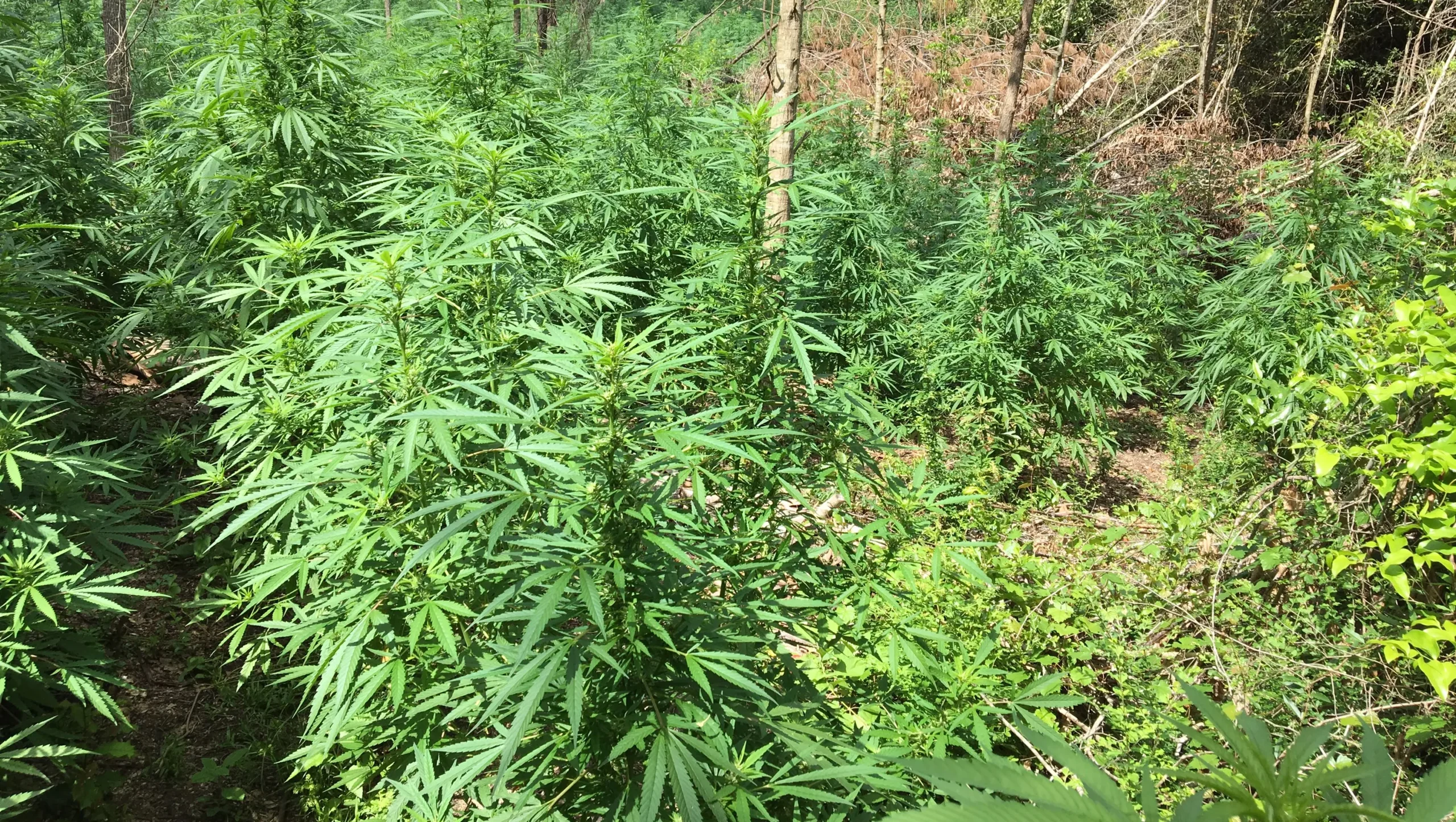
“Holy cow.” That was the response of John Dowdy, Director of the Mississippi Bureau of Narcotics, upon discovering the extent of an illegal marijuana cultivation operation in Jefferson Davis County. Initially estimated at around 6,000 marijuana plants, the operation’s scale ballooned to over 20,000 by the following day, marking it as the largest outdoor marijuana grow uncovered in Mississippi in more than 35 years. Dowdy now estimates the street value of the seized plants at a “conservative” $20 million.
Elaborate Cultivation Setup
The marijuana plants were located off Polk Oatis Road, approximately two miles east of Granby Road, spread across multiple fields covering four to six acres. Authorities reported the sophistication of the setup, featuring irrigation systems connected to a large swimming pool and a neighbor’s pond. The fields included 6-foot tall plants and campsites equipped with tents, clothing, and food, suggesting that individuals had been living on-site.
Contrary to the hidden nature of the grow operation, an underground bunker equipped with a ladder and generator was also discovered, though its purpose remains unclear. Tarps were observed covering areas used for drying and processing the marijuana. Notably, the extensive operation went unnoticed from the nearby road, highlighting the planning involved.
Law Enforcement Response
Following a tip-off, surveillance was conducted primarily from drone and helicopter perspectives. Upon arrival, law enforcement found the sites deserted, indicating the suspects may have fled upon noticing the aerial approach. “They knew what they were doing, and they were very sophisticated,” noted Dowdy, who indicated that investigators are following leads related to the operation.
By Thursday afternoon, a bulldozer was clearing a path for easier access to the cultivation sites, where authorities began to remove the plants. Jefferson Davis County Sheriff Ron Strickland expressed relief over the disruption of the operation, emphasizing the volume of marijuana involved.
Significant Implications for Mississippi’s Cannabis Landscape
As Mississippi navigates its evolving cannabis legislation and market, this operation underscores the challenges state authorities face. Dowdy remarked that the sophistication of the grow operation resembled that of established cartel operations seen in other regions. “This is the most significant and sophisticated grow that we’ve seen in Mississippi, probably ever,” he stated.
The eradication process initiated by the Bureau of Narcotics will entail the removal and incineration of the seized plants, signaling a concerted effort to address illegal cannabis activities within the state. As this situation unfolds, it will be crucial to observe how it informs future regulations and policing in Mississippi’s cannabis industry.
