


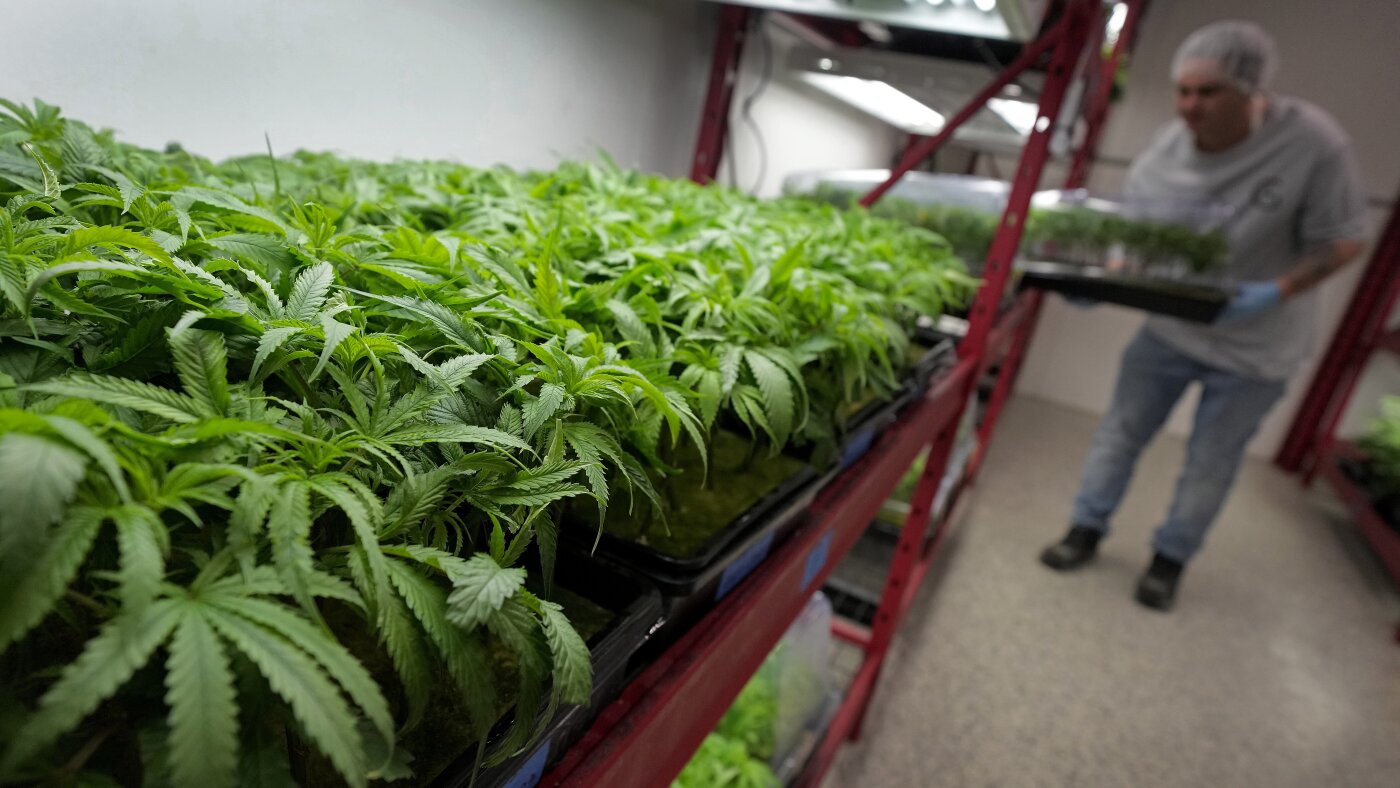
Michael Stonebarger sorts young cannabis plants at a marijuana farm in Grandview, Mo., in 2022. President Trump has initiated a process to ease federal restrictions on marijuana; however, his directive does not eliminate laws that still classify marijuana as illegal for interstate transport.
Trump’s executive order to relax U.S. cannabis restrictions offers potential immediate benefits for businesses in the cannabis sector. While rescheduling marijuana to a lower-risk classification signals a new phase for cannabis research, experts caution that the transition is complicated. Gillian Schauer, executive director of the Cannabis Regulators Association, notes that misinformation exists around the implications of the order. “Those things are not true as of now,” she said.
The order issued on December 18 does not independently alter over five decades of federal drug policy. According to Schauer, the Controlled Substances Act of 1970 does not allow a president to single-handedly reschedule drugs; such changes typically require either a formal rulemaking process or legislation from Congress. The specifics of how the administration will action this order will determine the timeline and extent of the intended loosening of cannabis restrictions. Rescheduling alone will not modify federal laws pertaining to marijuana, maintaining its illegal status for interstate commerce.
Potential Outcomes of the Executive Order
The pathway forward will largely depend on the approach taken by the Department of Justice (DOJ). Trump’s directive instructs Attorney General Pam Bondi to expedite the rulemaking necessary for reclassifying marijuana to Schedule III of the Controlled Substances Act. This designation would position marijuana alongside other substances like ketamine and anabolic steroids, which are viewed as having lower abuse potential.
There is also a possibility that the Trump administration may build upon actions initiated under President Biden, where agencies advocated for reclassifying marijuana. However, the current executive order implies a potential shortcut that allows the attorney general to move drugs to an appropriate schedule without following conventional steps.
Impact on Cannabis Businesses
In the cannabis industry, the rescheduling of marijuana could have several profound implications. One immediate benefit, as highlighted by Sam Brill, CEO of Ascend Wellness Holdings, would be the repeal of IRS Section 280E, a tax code that severely restricts cannabis businesses from claiming standard deductions. This shift could significantly lower effective tax rates, allowing companies to retain more earnings for operational growth.
Moreover, cannabis firms are currently hampered by the inability to use credit card transactions, an ongoing challenge due to banking institutions’ hesitance to engage with legalized cannabis operations. Brill emphasizes the inconvenience for customers posed by this cash-only status.
Research Opportunities and Challenges
The potential for expanded medical research into cannabis is recognized within the scientific community. While moving marijuana away from the Schedule I classification could simplify the research process by eliminating stringent licensing requirements, significant hurdles remain. Researchers still face challenges in obtaining cannabis samples for studies, as federal policies dictate sourcing from a limited number of suppliers.
As states like Mississippi navigate evolving legislation, the landscape for cannabis remains dynamic, presenting both opportunities and complexities for stakeholders across the industry. The potential easing of federal restrictions, combined with state-level legalization, may open new avenues for economic growth and innovation within the cannabis sector.
