

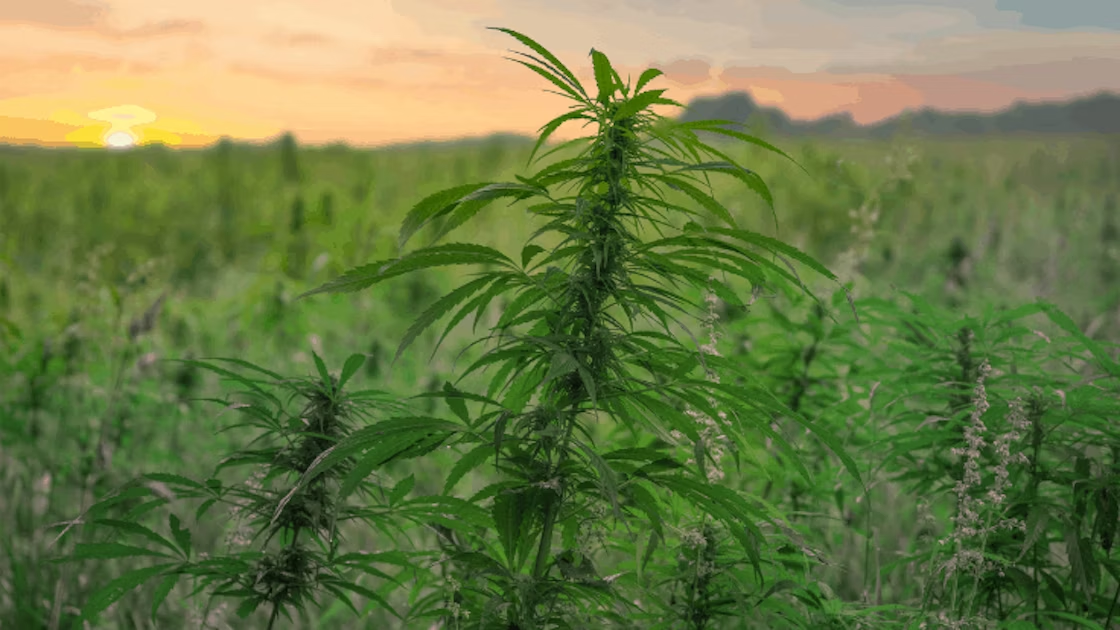
In June 2020, Mississippi lawmakers approved the legalization of hemp, marking a new agricultural opportunity for the state. To support prospective hemp farmers, the Mississippi Industrial Hemp Association (MIHA) has stepped in to provide essential resources, education, and expertise. A pilot program was launched to assist farmers in cultivating hemp legally and effectively.
Background of Hemp Legislation in Mississippi
The Agriculture Improvement Act of 2018, known as the 2018 Farm Bill, was enacted in June 2018, and Mississippi adopted its regulations in 2020. At that time, approximately 275 licenses had been issued for hemp farming, yet none were actively cultivating the crop, according to MIHA Executive Director Melanie Sorenson. She noted that a task force report identified four key elements necessary for the advancement of hemp farming in the state: education for farmers and law enforcement, reliable testing methods, streamlined distribution channels, and access to processing facilities.
MIHA’s Pilot Program
Launched in December 2020, the MIHA’s pilot program aims to fill the gap in education and preparation for hemp cultivation, an area previously underserved in Mississippi. Sorenson emphasized the need for research and collaboration, stating that the pilot program allows farmers to familiarize themselves with hemp cultivation without incurring excessive costs. Interested farmers can enroll by joining MIHA for an annual fee of $200.
Participants in the program retain 70% of their product profits while MIHA takes 30%. In return, farmers receive comprehensive education, free seeds, equipment assistance, and guidance on marketing their products. Furthermore, farmers can opt to handle processing and distribution on their own.
Support and Resources for Farmers
The MIHA also offers consultation services for farmers, helping them assess soil quality, optimal growing conditions, and personal farming goals. Additionally, the association provides quality control testing, assisting participants in the regulatory process involving the U.S. Drug Enforcement Agency (DEA). Sorenson highlighted the association’s aim to empower farmers by providing vital information rather than imposing strict guidelines on cultivation practices.
Current Participants and Future Plans
Currently, the pilot program includes four farmers—three have started cultivating since February, while another is preparing for seed planting. The cohort primarily consists of emerging farmers who, although having agricultural backgrounds in areas like livestock or produce farming, lack prior experience with hemp cultivation.
The MIHA plans to initiate its second pilot program in October, aiming to equip more farmers with the necessary skills and knowledge. Ongoing initiatives include the development of educational resources such as classes and podcasts tailored for hemp farmers.
Data and Continuous Improvement
Participants in the pilot program remain engaged for two years, with MIHA committed to maintaining an annual flow of new entrants. A notable benefit of the program is the collective data gathered, which supports farmers in understanding the best seeds and practices for Mississippi’s unique agricultural landscape. MIHA is currently collaborating with the Mississippi Crop Management Association to certify seeds specific to the region.
As the MIHA expands its services and resources, the organization aims to provide farmers with critical data that would be challenging to compile independently. This collaborative effort can significantly aid in driving the state’s hemp industry forward.
