

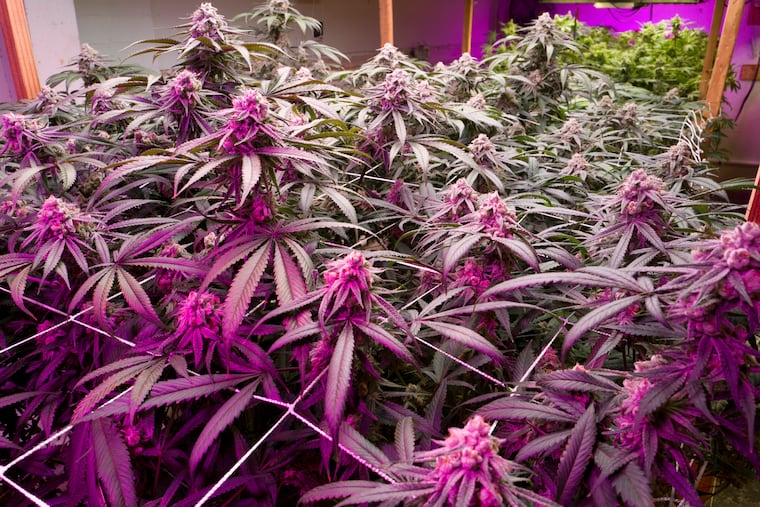
The U.S. Department of Justice announced plans to expand the number of marijuana growers authorized to supply institutions conducting federally approved cannabis research. This initiative could benefit notable cannabis companies with significant operations in the region, including Columbia Care and Pharmacann. However, any selected firm will be producing marijuana solely for research purposes, not for public distribution.
For decades, the University of Mississippi has maintained a monopoly as the only entity federally licensed to produce marijuana for research. This long-anticipated development follows researchers seeking court intervention to compel the Drug Enforcement Administration (DEA) to process applications for research cultivation. Although the DEA began accepting these applications about three years ago, it has yet to approve any of the more than two dozen submissions received.
“I would hope this is a further reflection of the federal government accepting the fact that cannabis may provide certain health benefits to patients in this country,” remarked Joshua Horn, a Philadelphia-based cannabis attorney. Reflecting on recent FDA approvals of cannabis-derived medications like Epidiolex, he posits this is a logical extension of that decision.
Congressional Oversight and Concerns
Both Republican and Democratic lawmakers have scrutinized the Justice Department for its delays. U.S. Attorney General William Barr previously promised to investigate the status of these applications.
Researchers have consistently criticized the quality of cannabis produced in Mississippi, citing issues of low potency and contamination, commonly referring to it as “Mississippi ditch weed.” Many researchers argue that these delays have hindered their ability to conduct federally sanctioned scientific studies utilizing high-quality cannabis from other states.
Wider Research Opportunities
The recent announcement aims to provide researchers with a broader range of cannabis strains for study. Uttam Dhillon, acting administrator of the DEA, stated, “DEA is making progress in the program to register additional marijuana growers for federally authorized research and will work with other relevant federal agencies to expedite the necessary next steps.”
The impact of this decision on Pennsylvania’s clinical research program remains uncertain. The state recently awarded three permits to companies collaborating with major health systems for observational studies and is currently accepting applications for five more.
Advocacy for Quality Research
Dr. Sue Sisley, an Arizona-based physician focused on marijuana’s effects on PTSD and opioid abuse disorders, hailed the DEA’s intention to dismantle Mississippi’s long-standing monopoly as a “complete and historic victory.” Dr. Sisley, who previously filed a federal lawsuit for access to higher-quality cannabis, expressed cautious optimism about the situation. “Now we just need to keep the DEA’s feet to the fire and make sure they follow the timelines laid out in today’s public notice,” she stated.
Her Scottsdale Research Institute in Arizona is among 33 entities applying to become “bulk manufacturers of marihuana.” Other applicants include JT Medical from Lewistown, Pa., the University of Massachusetts, and the University of California, Davis. The University of Mississippi has also re-applied.
The Department of Justice’s announcement invites more cannabis growers to apply, with plans to propose new regulations to oversee the application process.
Industry Skepticism
John Hudak, a senior fellow at the Brookings Institution, expressed skepticism regarding the DEA’s commitment to expediting the process. “They are buying themselves more time by saying, ‘We’ll begin to consider applications, but we’ll need everyone to comply with a new set of regulations,’” he said. “My guess is that unless they have already identified a grower they are comfortable with, they may disqualify others, looking to delay this as long as possible.”
