

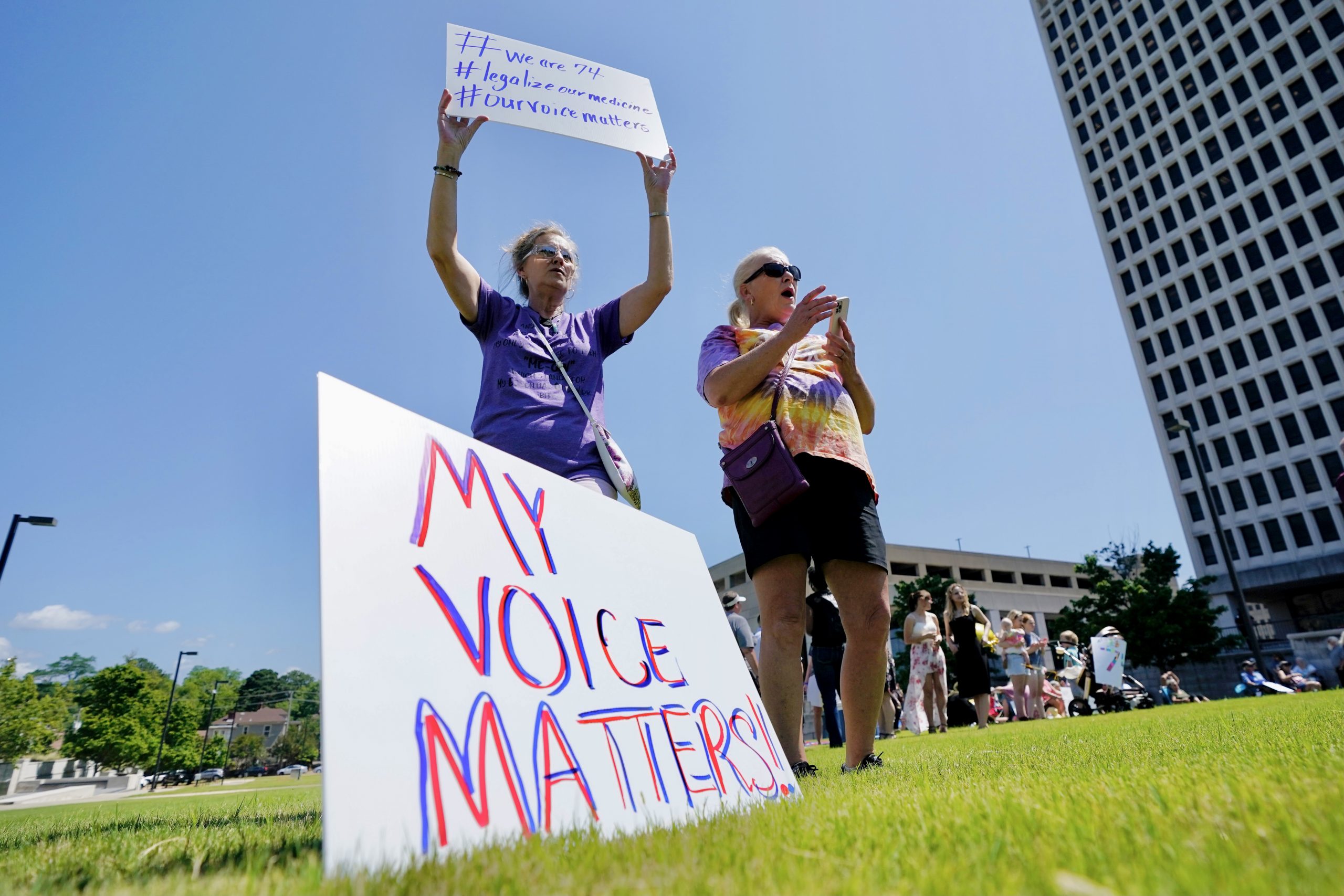
After a citizen-sponsored ballot initiative put the personal interests of a powerful Mississippi official at risk, the Mississippi Supreme Court granted relief by striking down the state’s entire Citizen Initiative and Referendum process on a technicality in 1922. Fast forward to today, and citizens are accusing the state’s high court of once again undermining democracy in the Magnolia State.
Mississippi voters recently regained the right to enact changes through ballot initiatives after seven decades. However, last month, the Mississippi Supreme Court nullified Section 273(3), the 1992 ballot initiative law, citing a technicality after the mayor of Madison objected to a voter-approved medical marijuana law.
“When the Section 273(3) initiative was approved in the 1992 election, it received an astounding 70% of the popular vote, indicating broad support for the provision. Unfortunately, history seems to be repeating itself,” a group of Mississippians stated in a May 28 court filing, urging the court to reconsider its decision.
Call for Rehearing
In a statement, Kelly Jacobs, co-chair of an early voting ballot initiative campaign halted by last month’s ruling, emphasized the need for a rehearing to present “new information” to justices.
“Our goal is to have a rehearing. We want our Constitution to remain intact and the certified election results of Initiative 65 to be enforced,” Jacobs asserted, referencing the medical marijuana initiative approved by more than two-thirds of voters last November.
Opposition from Local Officials
Days before the pivotal 2020 election, Madison Mayor Mary Hawkins Butler publicly stated that she would seek legal avenues to block Initiative 65 if it passed, voicing concerns about “pot shops” in her city. Her legal team identified a supposed flaw in Section 273(3) that they argued rendered the initiative invalid.
Section 273(3) mandates that citizens must collect signatures from each of the state’s five congressional districts to qualify an issue for the ballot. However, since Mississippi lost a congressional district after the 2000 Census, Butler’s attorneys argued that it was impossible for citizens to gather the required signatures. The Mississippi Supreme Court ultimately agreed with this interpretation.
“Because Initiative 65 was placed on the ballot without meeting the Section 273(3) prerequisites, it was done in violation of the Mississippi Constitution,” wrote Justice Josiah D. Coleman, representing the court’s 6-3 majority.
In a dissent, Associate Justice James D. Maxwell II criticized the decision, arguing it undermined voters’ rights by invalidating the ballot initiative process.
Legislative Challenges
Following the ruling, Secretary of State Michael Watson expressed reluctance to seek a rehearing, believing it would ultimately be futile. Instead, he encouraged Governor Reeves to reconvene the Legislature to address important issues like medical marijuana, voter-approved eminent domain, and voter ID laws. “In talking with voters around the state, many feel as though their voices are not being heard,” he remarked.
Many citizens are apprehensive about whether the Legislature will successfully rectify the ballot initiative law or implement an adequate medical marijuana program. Some lawmakers express skepticism toward the ballot initiative process altogether, with Sen. Hob Bryan labeling it “a terrible way to make policy.”
On the other hand, Senator Chris McDaniel sees a path forward that involves updating the language relating to congressional districts while cautioning that some lawmakers may seek to complicate the process for citizens.
A Historical Perspective
Critics argue that this recent ruling mirrors past legislative maneuvers suppressing voter initiatives. Mississippi has a long history of citizens advocating for a ballot initiative process dating back to 1912, despite repeated struggles against legislative resistance.
The 1992 ballot initiative that revived citizens’ ability to propose amendments through their own powers secured 70% voter approval. However, this core democratic right is at risk once again, as evidenced by the unwillingness of the current Legislature to respond to the needs of its constituents.
As the battle over ballot initiatives continues, advocates argue that the court has historically favored the interests of powerful officials over the will of the voters. Many citizens believe that recent developments signal a troubling trend in Mississippi politics that threatens democratic accountability.
