

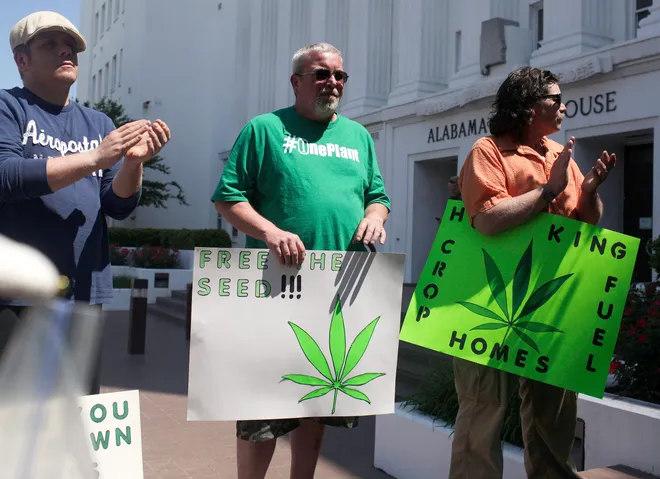
Since Colorado became the first state to legalize marijuana for adult recreational use in 2012, 36 states have enacted laws permitting it for medical or recreational purposes. Approximately 68% of Americans favor legalizing marijuana, according to a recent Gallup poll. The nation has steadily moved towards ending marijuana prohibition; however, the South has historically lagged behind. Despite this, some states in the region are now starting to embrace reform.
Recent Legislative Developments in Southern States
In a significant shift, several Southern states have made noteworthy advances in marijuana policy reform recently. Louisiana’s Governor John Bel Edwards signed a decriminalization bill in June, allowing possession of 14 grams or less of marijuana. The state’s medical marijuana program, initiated in 2016, can now sell marijuana in its flower form, enhancing affordability and accessibility for patients. Following years of legislative challenges, Alabama also legalized medical marijuana this year, joining Louisiana and Arkansas, which had previously been the only Southern states with medical programs.
Advocates note that Mississippi and North Carolina have established laws to decriminalize small amounts of marijuana. Despite a setback when the Mississippi Supreme Court overturned a medical marijuana program approved by nearly 70% of the state’s voters last year, discussions for reinstating some form of the program continue.
“Things are definitely progressing at a faster rate than they ever have in the past,” noted Jonathan Brown, president of CommonSense NOLA, a non-partisan group supporting marijuana reform in Louisiana. “Lawmakers are beginning to understand they are behind their constituents on this issue.”
Challenges and Opportunities in Louisiana’s Medical Marijuana Program
Louisiana’s medical marijuana program, one of the first in the South, remains heavily regulated. Currently, there are only two licensed cultivators and nine dispensaries. Unlike Arkansas, which has seen significant growth in its program, Louisiana has struggled to scale its offerings. Advocates argue that the introduction of smokable forms of marijuana will lower prices and improve patient access. However, limited options have kept Louisiana’s registered patient count at about 4,300, while Arkansas boasts nearly 80,000 registered patients.
Rep. Tanner Magee, who sponsored legislation allowing patients to buy up to two and a half ounces of marijuana flower every two weeks, emphasized the urgency for Louisiana to keep pace with neighboring states. A poll from the University of New Orleans indicated that 55% of registered Louisiana voters support full marijuana legalization, reflecting a growing public mandate for change.
Alabama’s New Medical Marijuana Law
Just across state lines, Alabama took a monumental step by legalizing medical marijuana, becoming the 37th state to do so in May. The law, conceptualized by Sen. Tim Melson, permits medical marijuana use for 15 conditions and establishes a regulatory committee for the program. Despite facing opposition from some lawmakers, the bill passed rapidly through the legislative process.
Patients face a waiting period before they can access the program, as they must demonstrate that previous treatments have failed. This requirement has raised concerns that it could push patients toward opioid treatments instead. Despite these barriers, a poll showed that 70% of Alabama physicians support legalized medical marijuana, indicating a willingness among healthcare providers to adapt to the new landscape.
Ongoing Advocacy for Cannabis in Mississippi
In Mississippi, advocates are continuing to fight for a robust medical marijuana program, even after a legal setback. Following the state Supreme Court’s decision to nullify a voter-approved medical marijuana initiative, efforts are underway to revive discussions about establishing a legal framework for cannabis. Public opinion remains strong; many residents are hopeful that their voices will ultimately shape policy in the state.
Mayor of Madison, Mississippi, initiated a lawsuit against the initiative, claiming procedural errors. Despite the ruling, advocates believe that the public sentiment for legalization provides a strong foundation for future policy efforts.
Gov. Tate Reeves has expressed support for a medical marijuana program, recognizing the need to align with voters’ preferences. “I think we will have a medical marijuana program in Mississippi,” he said, reflecting a growing acknowledgment of public support for reform.
As the cannabis landscape continues to evolve in the Southern U.S., states like Louisiana, Alabama, and Mississippi demonstrate both the challenges and opportunities inherent in reforming marijuana legislation. While progress may be slow, it indicates a significant shift in understanding and public demand for a viable cannabis industry in the region.
