

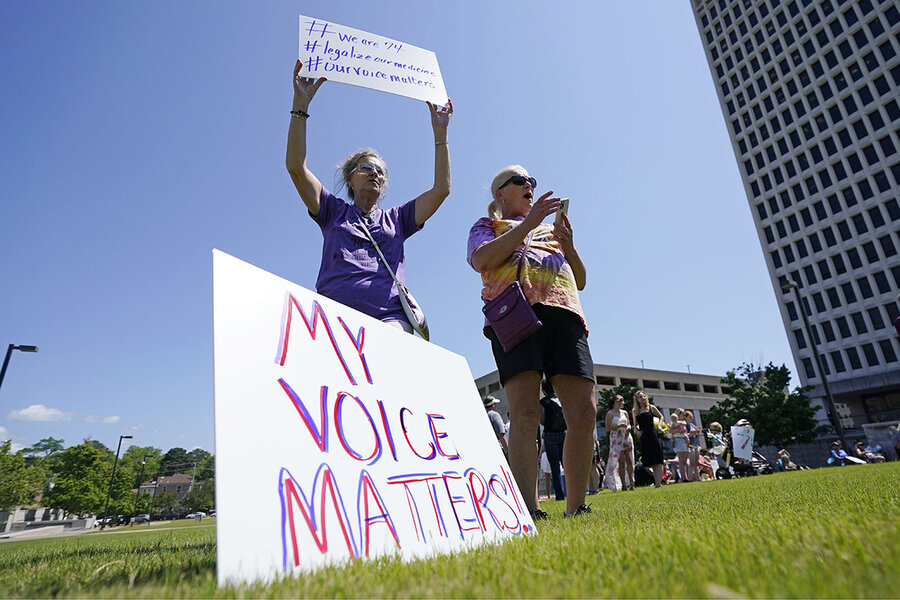
Zack Wilson, a self-identified “redneck” from a small town in North Mississippi, carries a Mississippi drawl as he navigates his work in the firearm industry. Last year, he was among the 74% of voters who endorsed Initiative 65, a measure aimed at legalizing medical marijuana in the state. Despite the overwhelming approval from more than two-thirds of the electorate, the future of the medical cannabis initiative now rests precariously between legislative authority and voter intent.
In a recent ruling, the Mississippi Supreme Court controversially struck down Initiative 65 with a 6-3 majority decision, raising questions about the legitimacy of voter initiatives from previous years. This judicial decision also casts a shadow over future ballot efforts, including potential Medicaid expansions and the push to restore Mississippi’s 1894 state flag.
Legal Technicalities and Voter Rights
The court’s ruling was based on a legal technicality in the Mississippi Constitution, which requires that signatures for a voter initiative be collected from each of the state’s five congressional districts. However, since 2002, Mississippi has only had four districts, leading critics to argue that the voices of voters have been silenced. Some experts suggest that the court’s decision, while seemingly politicized, may not reflect broader judicial patterns, as other initiatives have not faced similar challenges.
The tension between voters’ rights and legislative interference in Mississippi is not new. The ruling suggests that past voter approvals may still stand, but it fundamentally undermines the initiative process going forward, leaving many legal experts and citizens concerned about the state of democracy.
The Broader Implications for Ballot Initiatives
This ruling in Mississippi mirrors trends in other states where lawmakers have sought to limit citizen-led initiatives. For instance, after Florida voters supported Amendment 4 to restore voting rights to felons, state lawmakers enacted measures requiring payment of fines before rights could be restored. Similar efforts to constrain the initiative process have emerged in states like South Dakota and Arizona.
Historically, Mississippi has grappled with setbacks in its initiative process. The Mississippi Supreme Court first invalidated the initiative system in 1922, just five years after its inception, pushing the state to wait seven decades for restoration in 1992. Even with this restoration, the subsequent reduction of congressional districts has caused complications that have resurfaced today.
Local Perspectives on Legislative Action
Amidst the fallout from the court ruling, Mississippi Secretary of State Michael Watson has called for a special legislative session to address the situation. Residents like Melvin Robinson, founder of the Mississippi Cannabis Trade Association, argue that the legislature must take action to codify Initiative 65 as law to restore public trust. Robinson highlights the potential economic benefits of the medical cannabis industry, which could create jobs and stimulate local economies.
Despite vocal opposition from high-ranking officials like Governor Tate Reeves, who previously warned against the liberalization of marijuana laws, public sentiment appears to favor legal medical cannabis. The recent court ruling reinforces a growing perception that institutions may be out of touch with the constituents they serve.
Challenges Facing the Initiative Process
The Mississippi Supreme Court ruling has created significant hurdles for ballot initiative organizers, who face an arduous process to gather signatures and bring initiatives to the ballot. Advocates for the initiative process assert that judicial challenges undermine public engagement and voter empowerment.
As Mississippi reflects on its legislative history and current political dynamics, Dr. Thessalia Merivaki notes that this legal controversy could catalyze future efforts to amend constitutional technicalities surrounding the initiative process. With ongoing discussions and public discontent, the potential for change remains a significant aspect of Mississippi’s political landscape.
As the situation develops, the impact on public trust in elected officials and institutions will remain a crucial concern. Many, including Wilson, believe that the recent actions represent a regression in the relationship between the public and their representatives. With mounting frustration over perceived governmental overreach, the voices of Mississippi’s voters continue to resonate, highlighting the urgent need for accountability and responsiveness in governance.
