


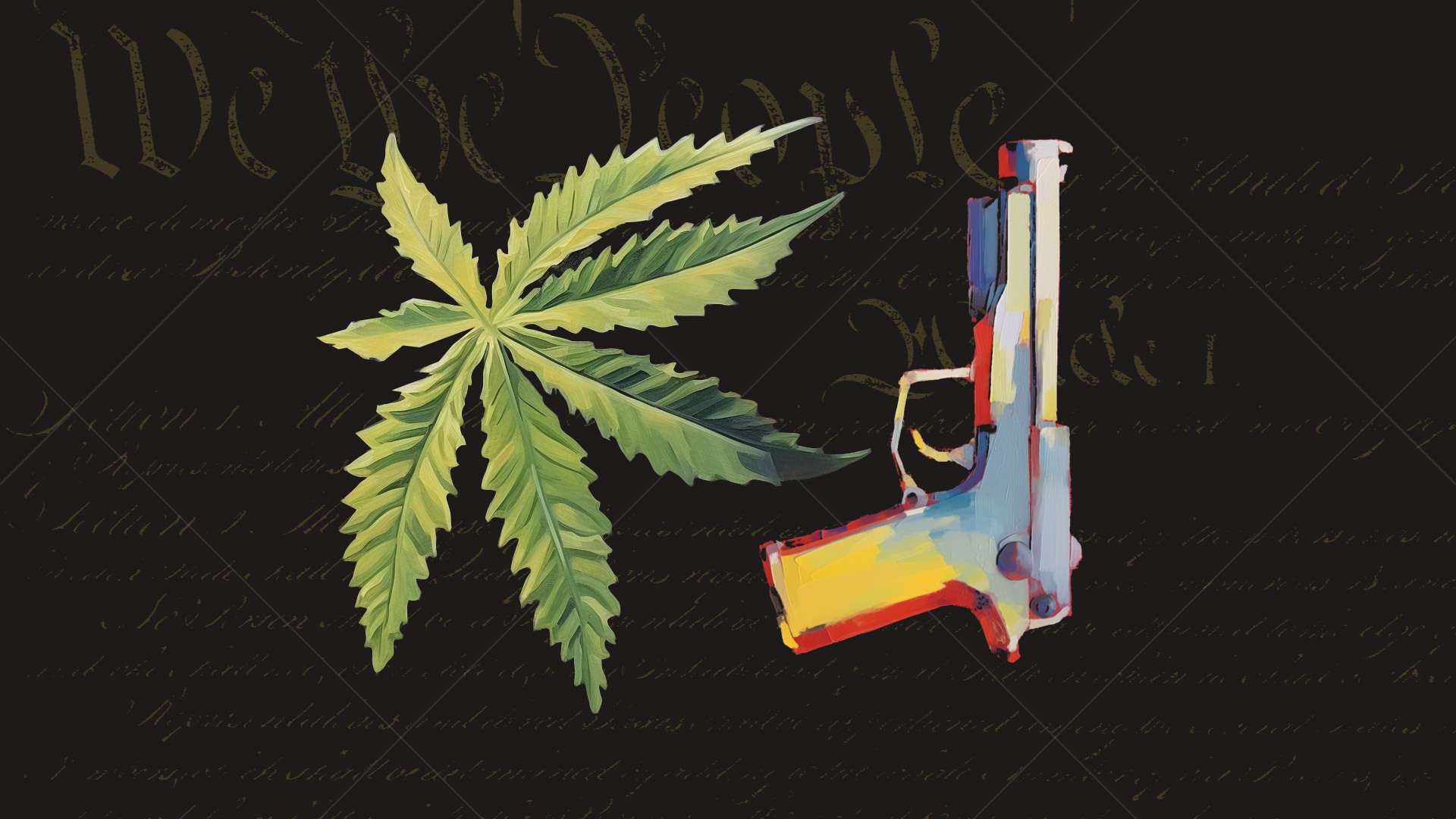
The U.S. Court of Appeals for the 5th Circuit has reaffirmed its stance that the federal government infringed upon the Second Amendment by prosecuting a Mississippi cannabis user, Patrick Darnell Daniels Jr., for illegal gun possession. In a decision released on Monday, a three-judge panel unanimously concluded that Daniels’ conviction under 18 USC 922(g)(3) — which makes it a felony for an “unlawful user” of a “controlled substance” to possess a firearm — is inconsistent with the historical context of gun regulation outlined by the Supreme Court in the 2022 case New York State Rifle & Pistol Association v. Bruen.
Case Background
Daniels was arrested in April 2022 during a routine traffic stop in Hancock County, Mississippi, where police found him in possession of firearms alongside remnants of marijuana. Following his conviction for illegal gun possession, he was sentenced to nearly four years in prison, plus three years of supervised release, resulting in the permanent loss of his Second Amendment rights.
The 5th Circuit initially overturned Daniels’ conviction in August 2023, citing its inconsistency with the Bruen standard. However, after the Supreme Court vacated this decision, the 5th Circuit was directed to reconsider the case in light of United States v. Rahimi, which upheld a prosecution under a different provision banning gun possession for individuals under domestic violence restraining orders.
Implications for Cannabis Consumers
In a related case, the court rejected a Section 922(g)(3) charge against Paola Connelly, a cannabis user whose firearms were discovered by El Paso police. The court ruled it unconstitutional to prosecute Connelly solely based on her drug use, establishing a precedent that significantly affects the treatment of cannabis consumers in the eyes of the law.
Judge Jerry E. Smith, in the majority opinion, emphasized that the jury’s instructions regarding Daniels’ unlawful drug use did not necessitate a demonstration of current impairment, which contributed to the reversal of his conviction. He noted the requirement for the jury to only find that unlawful use occurred recently enough to indicate ongoing engagement with drugs.
Constitutional Considerations
While acknowledging that the ruling does not invalidate Section 922(g)(3) in all instances, Smith remarked that future prosecutions must align with historical firearms regulations. Disarming individuals solely due to prior or occasional marijuana use was determined to be unsupported by the historical context of firearm laws.
The 5th Circuit’s ruling stands in contrast to the Biden administration’s defense of this statute, which posits that even those legally using cannabis for medical purposes possess an inherent risk and therefore lack Second Amendment protections. This legal context is particularly relevant as Mississippi continues to develop its cannabis industry, raising questions about the implications of federal law on state-licensed cannabis businesses and consumers.
As the landscape of cannabis legislation and regulation evolves across the United States, the outcomes of cases like Daniels and Connelly may influence not only the perceptions of cannabis use but also the broader dialogue surrounding gun rights and public safety in Mississippi and beyond.
